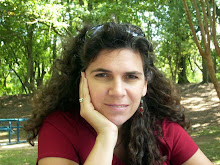
In the stage lights she comes alive, blinking and smiling as if emerging from a chrysalis. It is there I see her as she will be, confident and consummate, no longer the fifteen-year-old being lectured about her cell phone, or the sister arguing whose turn it is to wash dishes.
On the stage, she is in her element. Everything else is just an interlude between performances. She swims through the delicious tension, her eyes running over the assembled crowd. She speaks and her voice comes back to her through the amplifiers. She inhales, growing larger. She sings and the world smiles. She plays her fiddle and the bright lilting notes lift us in our seats.
At home in her room, in the basement, on the porch or on the roof, she fills hours and days with the same strokes, scratched out in maddening succession. I cup my hands around my mouth, leaning toward the stairs or out the window. “Slow it down! I can’t listen as fast you can play!”
There is silence for a moment and I picture her bow poised over the strings, tiny snowflakes of rosin sifting to the dark wood. Finally she shouts back, “I don’t know it slow!”
Later she tells me she does not know the notes at all. She says the music is in her fingers, not in her head.
I watch her now, gathering the heat of the stage lights and the chaotic energy of the small crowd. It courses through her body and flows out through two hands – the fingers of one moving subtly over the neck of the fiddle while the other hand lightly grasps the bow, wrist undulating as she saws the strings. The remnants of that energy escape through swaying hips and tapping foot.
I follow the notes – I know them better than my own heartbeat, although I could not squeeze two in a row from those alien strings. Perhaps they are my heartbeat. And when she is gone – don't think of it! -- the melody will play on in my head. It will be the music of my days, energizing my steps lest I falter. It will course through my veins, so that I grow with each breath and do not melt in the emptiness she has left behind.
Yes, she will move on to other adventures, other cultures, other loves. I will be someone she has to remember. We won't finish each other's sentences, or reach across the table for the same dish. She will be a voice on the phone, or a tiny string of text, enigmatic at times, as her life unfolds.
I try to picture her in the settings she has imagined aloud. I see her in an antiseptic room, blue eyes burning bright between cap and mask. I see her gloved hands aloft, bright with blood. Is this the child I have raised, fearlessly facing down death each day?
Or is this my child, in a dusty foreign land, surrounded by children with eyes as big as moons? I look at the hands that play the fiddle. I watch what tiny and precise movements create sound out of silence. The notes break across the crowd, and we are moved. Are these not hands that heal?
I imagine her in a chapel, slanted evening light illuminating a soft veil laid over her maple-colored curls. It occurs to me again that I cannot in good conscience say “Her father and I” if some preacher asks “Who gives this woman?” How can I give away what was never mine? If she were mine, I would hold her like a jewel burning cool in the palm of my hand. It might show you my jewel, but I would never turn over my fist, open my fingers and empty something so precious into your palm.
But she was never mine. I knew it the first time I held her, wriggling and bloody, against my body. This was not the child I had imagined growing in the womb, a part of me, an extension of myself. No. The little being who gazed up at me with curious sparkling eyes was a stranger here.
I know I am not alone. Every mother must feel that she has become the portal of angels. She kisses her baby's mottled head, and finds that the child does not smell of earth. A tinny cry makes music so soft, she cannot imagine how anyone could mind the sound of a baby crying in the night. She cannot fathom that this sweet infant will become the screaming, pounding little savage who dumps the fish bowl on the bed – again.
Yet the sweet-smelling infant and the brutal fish-killer are one being, moving through the world touching and tasting, gulping at the strange sweet air that is foreign but familiar, too. And somewhere nearby, a mother's watchful eyes drink in all those memories, the same way the child is drinking in the world.
When I was a child, I always wondered about the Virgin Mary. How could she wipe that perpetually dripping nose and clean that little bottom and still have faith that the boy on her lap was not an ordinary child or even a prophet, but actually God in human flesh? Then I became a mother, and I understood. It is no great feat for a woman to look at her child and feel something kin to worship.
Her dancing feet and peals of laughter proved what I knew. She was no mere mortal, no smartly packaged glob of cells and chromosomes. I called her Twinkle Toes. She danced in my arms. The music was always in her – or it was out there, perhaps, waiting like flowers to be gathered.
The long fingers that grasp the bow were once soft and dimpled. I close my eyes and see that little hand reaching back for me. A thousand times she ran ahead, always spotting some new adventure. But then the copper-colored locks bounced over her shoulder as she looked back.
“Hold me hand!” she sang, dark lashes fluttering over eyes as big as the sky. “Hold me hand!” I rushed forward to place my finger in her grasp, wondering where she would lead me.
#
Friday, December 26, 2008


Wednesday, December 17, 2008
Undoing Eight Years of Stupid
Sometimes the worst brings out the best
On election night, hope was palpable. A sort of jittery excitement filled the air at the Catoosa Democratic Headquarters in Ringgold, Georgia. A year ago, the local party was lucky to have twenty people at a breakfast meeting. Now, giddy Obama supporters edged past each other in the crowded banquet hall, sharing smiles and ogling the vast array of t-shirts and buttons. “Your grandparents were right,” read one sticker, “Vote Democratic.”
For decades, this area has been Democratic. That’s the reason we are known for having some of the best public schools around. It’s the reason we have a fabulous library, and a learning center that not only rescues individual educations, but actually boosts the local economy by increasing wages so that it brings in more revenue than it costs taxpayers. Nationally, Democratic values have brought us the social security program that supports the elderly, a public education system that ensures every child in America has the right and responsibility to go to school, help for the mentally ill, assistance for the impoverished and health care for poor children.
Curiously, the Republican Party has managed over time to misconstrue the notion of family values. Somehow a number of Christian voters have been convinced that Christianity is about denying rights to people who don’t believe like we do. Jesus was never into that. Jesus came to heal the sick, bind up the broken hearted and preach good news to the poor.
As the hours passed and the soft drinks disappeared at the election party, it became apparent that Barack Obama would be the next President of the United States. Our excitement was tempered by the memories of the 2000 election. It was not until the election was called with a wide margin that the true celebration began. White Democrats clapped and laughed and danced in the streets, vaguely wondering why the black Democrats had slipped away early. Then the sound of church bells pealed through the chilly air.
For days, the reality of what had taken place was still sinking in. “I can’t stop crying every time I think about it,” wrote my friend in New York, sounding so much like another friend in Hawaii and another in Canada. Suddenly a nation known for its racial divide had leaped from prejudice redneck status to multiculturalism, becoming an inspiration for reconciliation advocates in Europe and all over the world.
Not one to bask long in the glory of a moment, Barack Obama immediately got back to work. Less than one month from the election, he has already chosen most of his officials and cabinet members, including Hillary Clinton as Secretary of State and former Fed Chairman Paul Volcker as top economic advisor. Obama’s choices have thus far proven to be centrists and have sometimes crossed party lines (case in point, keeping Robert Gates as Defense chief.)
The task that lies before the President-elect is not an easy one. If the election was hard-won, economic and foreign policy success will be more difficult still. Some have even suggested that the Republicans were relieved not to win this cycle. After all, who wants to shoulder responsibility for the mess that Bush has made? The ship of state is not easy to turn around. It may take a decade or more to recover from the economic devastation of the Bush economy and quagmire in Iraq and Afghanistan.
Then again, maybe it is all easier than it sounds. It doesn’t take a genius to do better than Bush; Obama is probably overqualified. How does one undo eight years of stupid? A lazy but clean solution would be simply to make a list of every policy Bush in enacted, and reverse it. The Patriot Act is a good place to start.
The problems Obama is inheriting are no more daunting than those faced by Franklin Delano Roosevelt. We love and revere FDR because he took on leadership at a time when the nation was utterly devastated. Through creative strokes of genius, FDR not only salvaged the economy; he used the crisis as an opportunity to build infrastructure, spur innovation and strengthen American ideals.
George W. Bush’s legacy as the worst president in history presents an opportunity to the next president. If Barack Obama acts timidly and only tweaks the failed Bush policies, he can expect to be caught in the same quicksand that has brought us to this point. If Obama acts boldly, he can create a legacy as a leader who brought the United States out of depression and war, into a time of peace and prosperity. On the heels of “the worst president ever,” Obama can be the best president yet.
Subscribe to:
Posts (Atom)