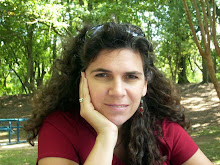
In the stage lights she comes alive, blinking and smiling as if emerging from a chrysalis. It is there I see her as she will be, confident and consummate, no longer the fifteen-year-old being lectured about her cell phone, or the sister arguing whose turn it is to wash dishes.
On the stage, she is in her element. Everything else is just an interlude between performances. She swims through the delicious tension, her eyes running over the assembled crowd. She speaks and her voice comes back to her through the amplifiers. She inhales, growing larger. She sings and the world smiles. She plays her fiddle and the bright lilting notes lift us in our seats.
At home in her room, in the basement, on the porch or on the roof, she fills hours and days with the same strokes, scratched out in maddening succession. I cup my hands around my mouth, leaning toward the stairs or out the window. “Slow it down! I can’t listen as fast you can play!”
There is silence for a moment and I picture her bow poised over the strings, tiny snowflakes of rosin sifting to the dark wood. Finally she shouts back, “I don’t know it slow!”
Later she tells me she does not know the notes at all. She says the music is in her fingers, not in her head.
I watch her now, gathering the heat of the stage lights and the chaotic energy of the small crowd. It courses through her body and flows out through two hands – the fingers of one moving subtly over the neck of the fiddle while the other hand lightly grasps the bow, wrist undulating as she saws the strings. The remnants of that energy escape through swaying hips and tapping foot.
I follow the notes – I know them better than my own heartbeat, although I could not squeeze two in a row from those alien strings. Perhaps they are my heartbeat. And when she is gone – don't think of it! -- the melody will play on in my head. It will be the music of my days, energizing my steps lest I falter. It will course through my veins, so that I grow with each breath and do not melt in the emptiness she has left behind.
Yes, she will move on to other adventures, other cultures, other loves. I will be someone she has to remember. We won't finish each other's sentences, or reach across the table for the same dish. She will be a voice on the phone, or a tiny string of text, enigmatic at times, as her life unfolds.
I try to picture her in the settings she has imagined aloud. I see her in an antiseptic room, blue eyes burning bright between cap and mask. I see her gloved hands aloft, bright with blood. Is this the child I have raised, fearlessly facing down death each day?
Or is this my child, in a dusty foreign land, surrounded by children with eyes as big as moons? I look at the hands that play the fiddle. I watch what tiny and precise movements create sound out of silence. The notes break across the crowd, and we are moved. Are these not hands that heal?
I imagine her in a chapel, slanted evening light illuminating a soft veil laid over her maple-colored curls. It occurs to me again that I cannot in good conscience say “Her father and I” if some preacher asks “Who gives this woman?” How can I give away what was never mine? If she were mine, I would hold her like a jewel burning cool in the palm of my hand. It might show you my jewel, but I would never turn over my fist, open my fingers and empty something so precious into your palm.
But she was never mine. I knew it the first time I held her, wriggling and bloody, against my body. This was not the child I had imagined growing in the womb, a part of me, an extension of myself. No. The little being who gazed up at me with curious sparkling eyes was a stranger here.
I know I am not alone. Every mother must feel that she has become the portal of angels. She kisses her baby's mottled head, and finds that the child does not smell of earth. A tinny cry makes music so soft, she cannot imagine how anyone could mind the sound of a baby crying in the night. She cannot fathom that this sweet infant will become the screaming, pounding little savage who dumps the fish bowl on the bed – again.
Yet the sweet-smelling infant and the brutal fish-killer are one being, moving through the world touching and tasting, gulping at the strange sweet air that is foreign but familiar, too. And somewhere nearby, a mother's watchful eyes drink in all those memories, the same way the child is drinking in the world.
When I was a child, I always wondered about the Virgin Mary. How could she wipe that perpetually dripping nose and clean that little bottom and still have faith that the boy on her lap was not an ordinary child or even a prophet, but actually God in human flesh? Then I became a mother, and I understood. It is no great feat for a woman to look at her child and feel something kin to worship.
Her dancing feet and peals of laughter proved what I knew. She was no mere mortal, no smartly packaged glob of cells and chromosomes. I called her Twinkle Toes. She danced in my arms. The music was always in her – or it was out there, perhaps, waiting like flowers to be gathered.
The long fingers that grasp the bow were once soft and dimpled. I close my eyes and see that little hand reaching back for me. A thousand times she ran ahead, always spotting some new adventure. But then the copper-colored locks bounced over her shoulder as she looked back.
“Hold me hand!” she sang, dark lashes fluttering over eyes as big as the sky. “Hold me hand!” I rushed forward to place my finger in her grasp, wondering where she would lead me.
#
Friday, December 26, 2008


Wednesday, December 17, 2008
Undoing Eight Years of Stupid
Sometimes the worst brings out the best
On election night, hope was palpable. A sort of jittery excitement filled the air at the Catoosa Democratic Headquarters in Ringgold, Georgia. A year ago, the local party was lucky to have twenty people at a breakfast meeting. Now, giddy Obama supporters edged past each other in the crowded banquet hall, sharing smiles and ogling the vast array of t-shirts and buttons. “Your grandparents were right,” read one sticker, “Vote Democratic.”
For decades, this area has been Democratic. That’s the reason we are known for having some of the best public schools around. It’s the reason we have a fabulous library, and a learning center that not only rescues individual educations, but actually boosts the local economy by increasing wages so that it brings in more revenue than it costs taxpayers. Nationally, Democratic values have brought us the social security program that supports the elderly, a public education system that ensures every child in America has the right and responsibility to go to school, help for the mentally ill, assistance for the impoverished and health care for poor children.
Curiously, the Republican Party has managed over time to misconstrue the notion of family values. Somehow a number of Christian voters have been convinced that Christianity is about denying rights to people who don’t believe like we do. Jesus was never into that. Jesus came to heal the sick, bind up the broken hearted and preach good news to the poor.
As the hours passed and the soft drinks disappeared at the election party, it became apparent that Barack Obama would be the next President of the United States. Our excitement was tempered by the memories of the 2000 election. It was not until the election was called with a wide margin that the true celebration began. White Democrats clapped and laughed and danced in the streets, vaguely wondering why the black Democrats had slipped away early. Then the sound of church bells pealed through the chilly air.
For days, the reality of what had taken place was still sinking in. “I can’t stop crying every time I think about it,” wrote my friend in New York, sounding so much like another friend in Hawaii and another in Canada. Suddenly a nation known for its racial divide had leaped from prejudice redneck status to multiculturalism, becoming an inspiration for reconciliation advocates in Europe and all over the world.
Not one to bask long in the glory of a moment, Barack Obama immediately got back to work. Less than one month from the election, he has already chosen most of his officials and cabinet members, including Hillary Clinton as Secretary of State and former Fed Chairman Paul Volcker as top economic advisor. Obama’s choices have thus far proven to be centrists and have sometimes crossed party lines (case in point, keeping Robert Gates as Defense chief.)
The task that lies before the President-elect is not an easy one. If the election was hard-won, economic and foreign policy success will be more difficult still. Some have even suggested that the Republicans were relieved not to win this cycle. After all, who wants to shoulder responsibility for the mess that Bush has made? The ship of state is not easy to turn around. It may take a decade or more to recover from the economic devastation of the Bush economy and quagmire in Iraq and Afghanistan.
Then again, maybe it is all easier than it sounds. It doesn’t take a genius to do better than Bush; Obama is probably overqualified. How does one undo eight years of stupid? A lazy but clean solution would be simply to make a list of every policy Bush in enacted, and reverse it. The Patriot Act is a good place to start.
The problems Obama is inheriting are no more daunting than those faced by Franklin Delano Roosevelt. We love and revere FDR because he took on leadership at a time when the nation was utterly devastated. Through creative strokes of genius, FDR not only salvaged the economy; he used the crisis as an opportunity to build infrastructure, spur innovation and strengthen American ideals.
George W. Bush’s legacy as the worst president in history presents an opportunity to the next president. If Barack Obama acts timidly and only tweaks the failed Bush policies, he can expect to be caught in the same quicksand that has brought us to this point. If Obama acts boldly, he can create a legacy as a leader who brought the United States out of depression and war, into a time of peace and prosperity. On the heels of “the worst president ever,” Obama can be the best president yet.
Wednesday, November 5, 2008
Today
Last night, we held our breath. There was no more time for calling or canvassing. It was like that moment when astronauts slingshot around the moon. We were Houston, watching intently but unable to assist.
Today we breathe deeply, and the sky looks more blue than ever before. Today we can do anything.
Last night, we watched the electoral votes surging slowly and erratically upward, and we sat taller by the minute.
Today we wear our Obama buttons just for fun, like football fans gleefully displaying our loyalty to the winning team. Today we love everyone who shared this moment with us, even (or especially) Senator John McCain.
Last night, there were whoops of joy, clapping hands, tears, laughter, cheering, hopping, and dancing in the street.
Today we remind each other of the hard road ahead, as if suddenly we must temper hope with realism, when for so long we have tempered realism with hope. It is so easy now to slough off fear and cynicism. It is so easy to smile and think of the better future that lies ahead for our children, so we keep reminding each other not to leave behind the tools that will help us climb this mountain.
Last night, the church bells were ringing through the cold, still air.
Today, we are practicing the sound of it in our mouths: President Obama.
#
Today we breathe deeply, and the sky looks more blue than ever before. Today we can do anything.
Last night, we watched the electoral votes surging slowly and erratically upward, and we sat taller by the minute.
Today we wear our Obama buttons just for fun, like football fans gleefully displaying our loyalty to the winning team. Today we love everyone who shared this moment with us, even (or especially) Senator John McCain.
Last night, there were whoops of joy, clapping hands, tears, laughter, cheering, hopping, and dancing in the street.
Today we remind each other of the hard road ahead, as if suddenly we must temper hope with realism, when for so long we have tempered realism with hope. It is so easy now to slough off fear and cynicism. It is so easy to smile and think of the better future that lies ahead for our children, so we keep reminding each other not to leave behind the tools that will help us climb this mountain.
Last night, the church bells were ringing through the cold, still air.
Today, we are practicing the sound of it in our mouths: President Obama.
#
Jeannie's Endorsements
I'm a bit late in posting this, as of course it was published before the election. Nonetheless I'll include it to not have a missing link in my archive.
Vote for progress
Jeannie’s endorsements for 2008
Melvin Edwards for Catoosa County Board of Education
Check out the questionnaire interview completed by Brent Williams and Melvin Edwards. Williams talked only about his love of numbers. By contrast, incumbent Melvin Edwards talked about his love of kids and his love for education. As Edwards put it, education has been his whole life. As a former student of Ringgold Middle School where Edwards was principal, I know that his words ring true. Back then I thought he was too strict with his shiny shoes and militaristic attitudes. Now I read in the news about bomb threats and sexual assaults in schools all over the country, and understand why Melvin Edwards ran such a tight ship. He loves the kids in this county and wants to make sure every single student receives a solid education.
Both candidates recognize that we have major budget issues as a result of Perdue’s 1.5 billion cut in state educational funds. Williams is focused on budget cuts and is threatening to outsource our school buses. Edwards is focused on educating the children in this county.
Ralph Noble for District 3 State Rep
The children of north Georgia desperately need an advocate in Atlanta to prevent further robbing of our educational system. That’s why I am endorsing Ralph Noble, who is a public school teacher and former president of the Georgia Educators Association. On his website, Noble states, “My top priority will be to fully fund education in Georgia.”
Noble’s platform also includes fighting for responsible middle class tax cuts and providing quality, affordable health care for children and the elderly. Noble believes that groceries should always be tax exempt and that hunting and fishing rights should be protected. These types of “common sense” approaches to government make Ralph Noble an excellent candidate for the Georgia House of Representatives.
Sadie Morgan for District 2 State Rep
In District 2, the best choice for the Georgia House of Representatives is Sadie Morgan. Sadie is not a career politician. Like many people in her district, she knows the day-to-day struggle of raising a family in a weakening economy. Sadie Morgan was talking about the coming foreclosure crisis during the last campaign, while her Republican opponent Martin Scott was so out of touch, he claimed the biggest problem facing District 2 was Islamic fascism. What a joke! The only fascists around here are the ones who wear white sheets.
Bruce Coker for Georgia Senate
Just as we need Sadie’s vision and Ralph’s common sense in the statehouse, we also need solid, real-people representation in the Georgia Senate. Bruce Coker is a long-time public servant who truly cares about the individuals in his district. While he may not possess the slick charm of incumbent Jeff Mullis, Coker also lacks the lobbyist ties and political entanglements.
Jeff Mullis has proven to be an expensive employee without results. Consider that citizens are paying Mullis $75,000 per year as head of the Northwest Georgia Joint Development Authority to bring business to the county, in addition to what he makes as state senator. Some citizens point out that this is “double dipping” and a conflict of interests. More telling, no jobs have been produced. Time has come to release Mullis from both his ineffective positions.
Jim Powell for Public Service Commissioner
Jim Powell will stop the systematic deregulation of the power industry, which has increased power prices by about 40%. Once again power producers will be required to practice least-cost planning so that our rates are kept low. Fuel source diversity and energy efficiency are two ways Powell will bring down those rates. As a former senior official with the U.S. Department of Energy, Powell has more than twenty years in federal energy policy and programs, making him easily the most experienced candidate for the job.
Jeff Scott for US Congress
The first time I heard Jeff Scott speaking about smaller government and personal responsibility, I scoffed, “I’m not sure that guy is really a Democrat.” Frankly, he sounded too much like Reagan. Since then I’ve decided that Dr. Scott is a super-moderate kind of guy who thinks about issues deeply without checking the party line. For example, the Democratic platform on health care is that it should be freely (or at least cheaply) available to everyone. Dr. Scott emphasizes teaching healthy living habits and prevention so that medical costs are decreased.
Incumbent Nathan Deal has been a bad deal for north Georgia. He has repeatedly voted right down Bush’s party line -- against education and health care and in favor of Big Oil, invasion of our privacy without warrant, and endless war. Most frightening is Deal’s collusion with neoconservatives who want to replace income taxes with a 26% sales tax that will destroy small businesses and unfairly burden the middle class.
What we need in Washington is a fresh, open-minded representative who will look out for ordinary people like me and you. I have every confidence that Dr. Jeff Scott is the man for the job. Last weekend I asked Dr. Scott why he was running for office. He replied, “to get the government ‘of the people, by the people and for the people’ back to the people.”
Jim Martin for US Senate
As a state representative, Jim Martin helped found the PeachCare program that continues to provide affordable healthcare for thousands of Georgia children. Under two governors – one Democrat and one Republican – Jim Martin served as head of Georgia Department of Human Resources. Now Martin is running for the US Senate in order to help Americans recover from the failed policies of Bush and Cheney.
Incumbent Saxby Chambliss has been nothing but a Bush lapdog. Chambliss voted against bringing our troops home. He has repeatedly voted against health care for children and veterans. He even voted against requiring better gas mileage for new cars and against researching alternative fuels. He has voted down the line with the Bush agenda with only one exception: Chambliss supported farm subsidies, a wasteful corporate welfare program that benefits wealthy agricultural interests. Amazingly, Chambliss is even worse than Bush.
Barack Obama for President, Joe Biden for Vice President
The Obama/Biden ticket is truly an opportunity to turn around our economy, our foreign policy, and our future. The McCain camp talks about change even as they support every failed policy Bush has put forth. They say there have been “mistakes made,” yet never enumerate what those mistakes were or how they would fix them. In short, McCain hopes to be Bush’s third term. The only citizens who should vote for the McCain/Palin ticket are those people who are prospering in this economy and happy with the way Bush has lead this country. If you are not happy with Bush, you will not be happy with McCain.
Vote for progress
Jeannie’s endorsements for 2008
Melvin Edwards for Catoosa County Board of Education
Check out the questionnaire interview completed by Brent Williams and Melvin Edwards. Williams talked only about his love of numbers. By contrast, incumbent Melvin Edwards talked about his love of kids and his love for education. As Edwards put it, education has been his whole life. As a former student of Ringgold Middle School where Edwards was principal, I know that his words ring true. Back then I thought he was too strict with his shiny shoes and militaristic attitudes. Now I read in the news about bomb threats and sexual assaults in schools all over the country, and understand why Melvin Edwards ran such a tight ship. He loves the kids in this county and wants to make sure every single student receives a solid education.
Both candidates recognize that we have major budget issues as a result of Perdue’s 1.5 billion cut in state educational funds. Williams is focused on budget cuts and is threatening to outsource our school buses. Edwards is focused on educating the children in this county.
Ralph Noble for District 3 State Rep
The children of north Georgia desperately need an advocate in Atlanta to prevent further robbing of our educational system. That’s why I am endorsing Ralph Noble, who is a public school teacher and former president of the Georgia Educators Association. On his website, Noble states, “My top priority will be to fully fund education in Georgia.”
Noble’s platform also includes fighting for responsible middle class tax cuts and providing quality, affordable health care for children and the elderly. Noble believes that groceries should always be tax exempt and that hunting and fishing rights should be protected. These types of “common sense” approaches to government make Ralph Noble an excellent candidate for the Georgia House of Representatives.
Sadie Morgan for District 2 State Rep
In District 2, the best choice for the Georgia House of Representatives is Sadie Morgan. Sadie is not a career politician. Like many people in her district, she knows the day-to-day struggle of raising a family in a weakening economy. Sadie Morgan was talking about the coming foreclosure crisis during the last campaign, while her Republican opponent Martin Scott was so out of touch, he claimed the biggest problem facing District 2 was Islamic fascism. What a joke! The only fascists around here are the ones who wear white sheets.
Bruce Coker for Georgia Senate
Just as we need Sadie’s vision and Ralph’s common sense in the statehouse, we also need solid, real-people representation in the Georgia Senate. Bruce Coker is a long-time public servant who truly cares about the individuals in his district. While he may not possess the slick charm of incumbent Jeff Mullis, Coker also lacks the lobbyist ties and political entanglements.
Jeff Mullis has proven to be an expensive employee without results. Consider that citizens are paying Mullis $75,000 per year as head of the Northwest Georgia Joint Development Authority to bring business to the county, in addition to what he makes as state senator. Some citizens point out that this is “double dipping” and a conflict of interests. More telling, no jobs have been produced. Time has come to release Mullis from both his ineffective positions.
Jim Powell for Public Service Commissioner
Jim Powell will stop the systematic deregulation of the power industry, which has increased power prices by about 40%. Once again power producers will be required to practice least-cost planning so that our rates are kept low. Fuel source diversity and energy efficiency are two ways Powell will bring down those rates. As a former senior official with the U.S. Department of Energy, Powell has more than twenty years in federal energy policy and programs, making him easily the most experienced candidate for the job.
Jeff Scott for US Congress
The first time I heard Jeff Scott speaking about smaller government and personal responsibility, I scoffed, “I’m not sure that guy is really a Democrat.” Frankly, he sounded too much like Reagan. Since then I’ve decided that Dr. Scott is a super-moderate kind of guy who thinks about issues deeply without checking the party line. For example, the Democratic platform on health care is that it should be freely (or at least cheaply) available to everyone. Dr. Scott emphasizes teaching healthy living habits and prevention so that medical costs are decreased.
Incumbent Nathan Deal has been a bad deal for north Georgia. He has repeatedly voted right down Bush’s party line -- against education and health care and in favor of Big Oil, invasion of our privacy without warrant, and endless war. Most frightening is Deal’s collusion with neoconservatives who want to replace income taxes with a 26% sales tax that will destroy small businesses and unfairly burden the middle class.
What we need in Washington is a fresh, open-minded representative who will look out for ordinary people like me and you. I have every confidence that Dr. Jeff Scott is the man for the job. Last weekend I asked Dr. Scott why he was running for office. He replied, “to get the government ‘of the people, by the people and for the people’ back to the people.”
Jim Martin for US Senate
As a state representative, Jim Martin helped found the PeachCare program that continues to provide affordable healthcare for thousands of Georgia children. Under two governors – one Democrat and one Republican – Jim Martin served as head of Georgia Department of Human Resources. Now Martin is running for the US Senate in order to help Americans recover from the failed policies of Bush and Cheney.
Incumbent Saxby Chambliss has been nothing but a Bush lapdog. Chambliss voted against bringing our troops home. He has repeatedly voted against health care for children and veterans. He even voted against requiring better gas mileage for new cars and against researching alternative fuels. He has voted down the line with the Bush agenda with only one exception: Chambliss supported farm subsidies, a wasteful corporate welfare program that benefits wealthy agricultural interests. Amazingly, Chambliss is even worse than Bush.
Barack Obama for President, Joe Biden for Vice President
The Obama/Biden ticket is truly an opportunity to turn around our economy, our foreign policy, and our future. The McCain camp talks about change even as they support every failed policy Bush has put forth. They say there have been “mistakes made,” yet never enumerate what those mistakes were or how they would fix them. In short, McCain hopes to be Bush’s third term. The only citizens who should vote for the McCain/Palin ticket are those people who are prospering in this economy and happy with the way Bush has lead this country. If you are not happy with Bush, you will not be happy with McCain.
Monday, October 6, 2008
Why do they stay?
Middle class voters and battered women's syndrome
As an advocate for abused women, I’ve heard the question a thousand times. Rather than asking why some men abuse or why society does not punish such criminals, people will invariably ask, “If women don’t like being abused, why do they stay?”
There are a number of incorrect assumptions in that question. First, it assumes the responsibility for abuse lies not with the abuser, but with the victim. This is obviously not true.
Second, the question assumes that abused women stay. Statistically, they don’t. It may takes months or years for a woman to safely extricate herself from a violent partner, but most women are so resourceful that eventually they do escape.
I understand the rationale for the question. Lately I’ve been wondering the same thing about middle class Republican voters. Year after year, Republican officials fleece the middle class. They regale us with promises of spending cuts, only to demand more pork than all their predecessors. They claim to be socially conservative while engaging in gay restroom hookups and chasing after teenage boys. They start wars they cannot finish and spend money we do not have. Even as they use patriotic language and religion to entice more recruits for their wars, they cut funding for veterans programs and wounded soldiers.
Throughout eight years of Bush, it has been discouraging to think that our children’s children will still be paying for this war. If McCain wins the 2008 election, our children’s children will still be fighting this war!
It is the middle class that bears the burden. Proportionally, ours is the greatest tax burden. Do middle class Republican voters really believe corporate welfare and tax cuts for rich people will “trickle down” to the average Joe? If it were true, Joe should be rich by now. Instead, Americans are poorer in real dollars than we have been in several decades.
The health care crisis also hits the middle class the hardest. The poorest citizens are still eligible for Medicaid, while programs like PeachCare that help the middle class are gutted and insurance companies are deregulated so they can invent more exceptions that fall outside covered expenses. These days it is hard to know which is rising fastest: deductibles, premiums or the cost of medicine.
Georgia Republican officials are no better than those on the national level. While middle class Georgians struggle with widespread fuel shortages, Governor Perdue and Senator Mullis run off to Spain. While Georgia public schools are failing (some so badly they actually lost their accreditation) and Georgia test scores are falling, school superintendent Kathy Cox goes on “Are You Smarter than a Fifth-grader?” to show off her knowledge. Middle class Georgians do not care how smart Kathy Cox is. We care what our own children are learning in the public schools we are funding with our tax dollars.
Like violent marriage partners, Republican politicians keep promising to change. Even though McCain and Palin support the Bush policies 100%, they somehow claim to be the party of change. Stealing Obama’s lines, they tell us to vote for them if we do not want “politics as usual.” Yet they cannot point out a single aspect where their policies will differ from the president who has the worst popularity rating ever.
Like other abusers, Republican politicians use religion and guilt to keep their victims in place. They set up “prayer groups,” non-profit organizations and TV preachers to proclaim that voting Democratic will imperil our souls. These are the same preachers who threaten women with the wrath of God if they divorce their abusers. When faced with a Democratic candidate who is a born-again Christian vs. a man who divorced his wife for his mistress, the abusers simply make up lies. Obama is a Muslim, they say. Since there is absolutely no evidence for this claim, they make him a closet Muslim, and an unpatriotic guy who befriends terrorists, to boot. None of this true, but lying is no big feat for an abuser trying to hold onto his prey.
Just like abusers everywhere, McCain and Palin claim to be mavericks to whom the rules do not apply. They condemn other politicians for pork barrel projects even though Alaska holds the record for per capita ear marks. They condemn lobbyists in politics, even though Sarah Palin was the first mayor to hire a lobbyist to bring pork barrel money to her little town of Wasilla. McCain continues to push for endless war in Iraq, even as American citizens and Iraqi officials call for an end to the occupation. They’re mavericks, all right.
Four more years of Bush-as-usual is not what voters want. In every state, middle class Americans are tired of war. Yet, for the presidential election, the Republican Party has selected the most crazed war hawk in American politics today. Why do they stay?
As with abused women, the question assumes too much. They don’t stay. They won’t stay. Sooner or later, middle class voters will be brave enough to leave the Republican Party behind.
As an advocate for abused women, I’ve heard the question a thousand times. Rather than asking why some men abuse or why society does not punish such criminals, people will invariably ask, “If women don’t like being abused, why do they stay?”
There are a number of incorrect assumptions in that question. First, it assumes the responsibility for abuse lies not with the abuser, but with the victim. This is obviously not true.
Second, the question assumes that abused women stay. Statistically, they don’t. It may takes months or years for a woman to safely extricate herself from a violent partner, but most women are so resourceful that eventually they do escape.
I understand the rationale for the question. Lately I’ve been wondering the same thing about middle class Republican voters. Year after year, Republican officials fleece the middle class. They regale us with promises of spending cuts, only to demand more pork than all their predecessors. They claim to be socially conservative while engaging in gay restroom hookups and chasing after teenage boys. They start wars they cannot finish and spend money we do not have. Even as they use patriotic language and religion to entice more recruits for their wars, they cut funding for veterans programs and wounded soldiers.
Throughout eight years of Bush, it has been discouraging to think that our children’s children will still be paying for this war. If McCain wins the 2008 election, our children’s children will still be fighting this war!
It is the middle class that bears the burden. Proportionally, ours is the greatest tax burden. Do middle class Republican voters really believe corporate welfare and tax cuts for rich people will “trickle down” to the average Joe? If it were true, Joe should be rich by now. Instead, Americans are poorer in real dollars than we have been in several decades.
The health care crisis also hits the middle class the hardest. The poorest citizens are still eligible for Medicaid, while programs like PeachCare that help the middle class are gutted and insurance companies are deregulated so they can invent more exceptions that fall outside covered expenses. These days it is hard to know which is rising fastest: deductibles, premiums or the cost of medicine.
Georgia Republican officials are no better than those on the national level. While middle class Georgians struggle with widespread fuel shortages, Governor Perdue and Senator Mullis run off to Spain. While Georgia public schools are failing (some so badly they actually lost their accreditation) and Georgia test scores are falling, school superintendent Kathy Cox goes on “Are You Smarter than a Fifth-grader?” to show off her knowledge. Middle class Georgians do not care how smart Kathy Cox is. We care what our own children are learning in the public schools we are funding with our tax dollars.
Like violent marriage partners, Republican politicians keep promising to change. Even though McCain and Palin support the Bush policies 100%, they somehow claim to be the party of change. Stealing Obama’s lines, they tell us to vote for them if we do not want “politics as usual.” Yet they cannot point out a single aspect where their policies will differ from the president who has the worst popularity rating ever.
Like other abusers, Republican politicians use religion and guilt to keep their victims in place. They set up “prayer groups,” non-profit organizations and TV preachers to proclaim that voting Democratic will imperil our souls. These are the same preachers who threaten women with the wrath of God if they divorce their abusers. When faced with a Democratic candidate who is a born-again Christian vs. a man who divorced his wife for his mistress, the abusers simply make up lies. Obama is a Muslim, they say. Since there is absolutely no evidence for this claim, they make him a closet Muslim, and an unpatriotic guy who befriends terrorists, to boot. None of this true, but lying is no big feat for an abuser trying to hold onto his prey.
Just like abusers everywhere, McCain and Palin claim to be mavericks to whom the rules do not apply. They condemn other politicians for pork barrel projects even though Alaska holds the record for per capita ear marks. They condemn lobbyists in politics, even though Sarah Palin was the first mayor to hire a lobbyist to bring pork barrel money to her little town of Wasilla. McCain continues to push for endless war in Iraq, even as American citizens and Iraqi officials call for an end to the occupation. They’re mavericks, all right.
Four more years of Bush-as-usual is not what voters want. In every state, middle class Americans are tired of war. Yet, for the presidential election, the Republican Party has selected the most crazed war hawk in American politics today. Why do they stay?
As with abused women, the question assumes too much. They don’t stay. They won’t stay. Sooner or later, middle class voters will be brave enough to leave the Republican Party behind.
Thursday, September 25, 2008
Got melamine?
Formula-fed infants are at risk both at home and abroad
As of this writing, approximately 53,000 Chinese babies have been treated for drinking toxic baby formula. The milk was tainted with melamine – the same chemical that killed over 300 American cats and dogs in the recent Chinese pet food scandal. This time, greedy corporations are killing children. So far, four child deaths have been attributed the formula, while tens of thousands of children are still suffering from painful kidney stones or partial renal failure.
A similar atrocity occurred in Japan in 1955, when arsenic-tainted milk powder poisoned over 12,000 newborns. Not until 1981 did the nation admit the extent of their baby milk atrocity: At least 600 deaths, over 6,000 people still suffering 26 years later, and 624 people afflicted by severe mental retardation, developmental difficulties, and paralysis caused by brain damage.
This is not the first baby milk massacre in China, either. In 2004, thirteen infants died from drinking counterfeit baby formula made from flour and water, and 170 others suffered serious malnutrition.
As in 2004, the current tragedy is no accident. Melamine (a substance used in plastic and fertilizer) was actually added to the baby formula as a way to increase corporate profits. Melamine mimics protein in some tests, so when the dairy farmers watered down the milk to cut costs, they added melamine to cover their tracks.
The investigation continues to unfold. So far Chinese authorities have detected melamine in 20% of the nation’s dairy milk. Twenty-two brands are affected. China initially claimed that the tainted milk was never exported beyond its borders. However, Chinese milk products have now been recalled from Bangladesh, Yemen, Gabon, Burundi and Myanmar.
Hong Kong regulators pulled Chinese milk, yogurt and ice cream off the market after finding that eight of thirty samples tested contained the poison. Hong Kong authorities found traces of melamine in two Nestle products – a follow-on formula for babies over a year old, and a type of milk used for catering. Nestle denies that their products are tainted, pointing out that Hong Kong recently made their melamine standards more stringent than U.S. and European standards.
The Chinese government is talking tough and taking action now, but the evidence indicates China knew about the poisoned milk weeks ago and chose not act until the end of the Olympics and Paralympics.
Chinese authorities will have no mercy on their designated scapegoat. After all, their government responded to the pet food scandal by executing the head of China’s food and drug safety agency. Perhaps in this case a fitting punishment would be a steady diet of Sanlu baby formula.
As China faces another hit to its national image, parents around the world wonder, “Could this happen here?”
The answer is a resounding yes. Here in the U.S., the FDA has issued a warning against all Chinese-produced baby formula. Although it is illegal to import baby formula from China, officials cite examples of Chinese brands being sold in ethnic stores.
All formula-fed infants are at risk for various types of contamination, both intentional and accidental. Formula-feeding is not like breastfeeding, in which the milk passes directly from source to destination without risk of contamination, and the breast milk itself even contains substances that kill off foreign organisms like Salmonella.
Instead, formula-fed babies are exposed to contamination risks throughout production, canning, distribution, and even at home as the artificial milk is poured into a plastic bottle containing BPA, a substance known to be hazardous to humans since the 1930’s. The bottle itself may also contain microorganisms, unless it has just been sterilized. Unfortunately, heat increases the release of BPA. Bottle-fed babies just cannot win.
The American formula industry issues product recalls every year. In May of this year, Abbott issued a recall because of product oxidation, which can cause nausea, vomiting and other gastrointestinal problems in infants. Past recalls have been issued by various U.S. formula manufacturers because of glass particles, unsanitary production conditions, Salmonella, incorrect mixing instructions, and other serious safety problems.
Intentional tampering has also occurred here in the United States. In 1995, the FDA seized 45,000 pounds of counterfeit infant formula. The milk trail led to ten factories in eight states that were making bogus formula with counterfeit labels. The fake formula was being sold in supermarkets under brand names.
More often, formula fraud occurs after manufacturing. Fraudulent wholesalers offer retail stores stolen, damaged or re-labeled formula. In one instance, a man and wife simply bought cases of cheap formula off the shelf, relabeled it as an expensive dairy-free formula, and then returned it to the store. The couple netted thousands of dollars before being caught. Several allergic babies were harmed by drinking substances they could not tolerate.
The FDA offers parents suggestions for avoiding counterfeit formula: Know how your baby’s formula looks, smells and tastes. It is interesting that they fail to recognize the simplest safeguard of all: Avoid baby formula.
In all but the rarest cases, babies are much better off drinking mother’s milk. Breast milk is full of nutrients that provide lifelong benefits to the child. Just as important are the substances you won’t find in breast milk -- melamine, arsenic, and Salmonella, to name a few.
As of this writing, approximately 53,000 Chinese babies have been treated for drinking toxic baby formula. The milk was tainted with melamine – the same chemical that killed over 300 American cats and dogs in the recent Chinese pet food scandal. This time, greedy corporations are killing children. So far, four child deaths have been attributed the formula, while tens of thousands of children are still suffering from painful kidney stones or partial renal failure.
A similar atrocity occurred in Japan in 1955, when arsenic-tainted milk powder poisoned over 12,000 newborns. Not until 1981 did the nation admit the extent of their baby milk atrocity: At least 600 deaths, over 6,000 people still suffering 26 years later, and 624 people afflicted by severe mental retardation, developmental difficulties, and paralysis caused by brain damage.
This is not the first baby milk massacre in China, either. In 2004, thirteen infants died from drinking counterfeit baby formula made from flour and water, and 170 others suffered serious malnutrition.
As in 2004, the current tragedy is no accident. Melamine (a substance used in plastic and fertilizer) was actually added to the baby formula as a way to increase corporate profits. Melamine mimics protein in some tests, so when the dairy farmers watered down the milk to cut costs, they added melamine to cover their tracks.
The investigation continues to unfold. So far Chinese authorities have detected melamine in 20% of the nation’s dairy milk. Twenty-two brands are affected. China initially claimed that the tainted milk was never exported beyond its borders. However, Chinese milk products have now been recalled from Bangladesh, Yemen, Gabon, Burundi and Myanmar.
Hong Kong regulators pulled Chinese milk, yogurt and ice cream off the market after finding that eight of thirty samples tested contained the poison. Hong Kong authorities found traces of melamine in two Nestle products – a follow-on formula for babies over a year old, and a type of milk used for catering. Nestle denies that their products are tainted, pointing out that Hong Kong recently made their melamine standards more stringent than U.S. and European standards.
The Chinese government is talking tough and taking action now, but the evidence indicates China knew about the poisoned milk weeks ago and chose not act until the end of the Olympics and Paralympics.
Chinese authorities will have no mercy on their designated scapegoat. After all, their government responded to the pet food scandal by executing the head of China’s food and drug safety agency. Perhaps in this case a fitting punishment would be a steady diet of Sanlu baby formula.
As China faces another hit to its national image, parents around the world wonder, “Could this happen here?”
The answer is a resounding yes. Here in the U.S., the FDA has issued a warning against all Chinese-produced baby formula. Although it is illegal to import baby formula from China, officials cite examples of Chinese brands being sold in ethnic stores.
All formula-fed infants are at risk for various types of contamination, both intentional and accidental. Formula-feeding is not like breastfeeding, in which the milk passes directly from source to destination without risk of contamination, and the breast milk itself even contains substances that kill off foreign organisms like Salmonella.
Instead, formula-fed babies are exposed to contamination risks throughout production, canning, distribution, and even at home as the artificial milk is poured into a plastic bottle containing BPA, a substance known to be hazardous to humans since the 1930’s. The bottle itself may also contain microorganisms, unless it has just been sterilized. Unfortunately, heat increases the release of BPA. Bottle-fed babies just cannot win.
The American formula industry issues product recalls every year. In May of this year, Abbott issued a recall because of product oxidation, which can cause nausea, vomiting and other gastrointestinal problems in infants. Past recalls have been issued by various U.S. formula manufacturers because of glass particles, unsanitary production conditions, Salmonella, incorrect mixing instructions, and other serious safety problems.
Intentional tampering has also occurred here in the United States. In 1995, the FDA seized 45,000 pounds of counterfeit infant formula. The milk trail led to ten factories in eight states that were making bogus formula with counterfeit labels. The fake formula was being sold in supermarkets under brand names.
More often, formula fraud occurs after manufacturing. Fraudulent wholesalers offer retail stores stolen, damaged or re-labeled formula. In one instance, a man and wife simply bought cases of cheap formula off the shelf, relabeled it as an expensive dairy-free formula, and then returned it to the store. The couple netted thousands of dollars before being caught. Several allergic babies were harmed by drinking substances they could not tolerate.
The FDA offers parents suggestions for avoiding counterfeit formula: Know how your baby’s formula looks, smells and tastes. It is interesting that they fail to recognize the simplest safeguard of all: Avoid baby formula.
In all but the rarest cases, babies are much better off drinking mother’s milk. Breast milk is full of nutrients that provide lifelong benefits to the child. Just as important are the substances you won’t find in breast milk -- melamine, arsenic, and Salmonella, to name a few.
Monday, September 15, 2008
Palin Pros and Cons
Several readers have asked me to weigh in on the selection of Alaska Governor Sarah Palin as Senator John McCain’s vice presidential running mate. The way I see it, there are pros and cons to the Palin pick.
PRO – She’s a woman. Over 50% of voters are women, and we are seriously underrepresented in American government.
CON – She’s against women. Palin is part of the most extremist anti-woman platform the Republicans have put forth in years. These Republicans are on the warpath, trying to limit access to ordinary contraceptive methods like the birth control pill, which the majority of American women depend on at some point in their lives. Palin is right in with this crowd, going on record to state that she is against abortion even in the case of rape or incest.
PRO – The restoration of a female to this election could appeal to some voters who are disillusioned over Hillary’s primary loss.
CON – Palin is no Hillary Clinton. Palin’s resume is so thin, it actually includes her high school basketball “career.” She is a one-term governor of the 4th smallest state by population, and before that she was the mayor of a town smaller than Fort Oglethorpe. Most Americans only heard of her last week. She is best known as the bee-hived governor who was almost Miss Alaska. She has no experience outside the state, much less with foreign affairs. According to the New York Times, Palin only got her passport in July, 2007. Even then, she did not visit Iraq as she has claimed.
By contrast, Hillary Clinton is a serious, seasoned political leader known all around the world. It’s not just the age difference. Since her twenties, Clinton has been featured in publications like Life Magazine. She attracted attention not for beauty pageants but for historic accomplishments, like being the first Wellesley student to deliver the commencement address and using that opportunity to criticize the senator who spoke just before she did.
While Republicans hail Palin as a reformer, it is Clinton who is a true crusader. Hillary was a force to be reckoned with even before she teamed up with Bill. In the late sixties, she fought for civil rights, and in the seventies she helped impeach Richard Nixon. In the eighties, while Palin was strutting down the runway in a bikini, Clinton was fighting for education reform in Arkansas and being named Mother of the Year for the second time.
As First Lady for two terms in the nineties, Clinton was so active in domestic and foreign affairs that critics printed bumper stickers reading “Impeach the President and her husband, too.”
Clinton’s greatest obstacle is being ahead of her time. Consider her bid to reform healthcare. As First Lady she was unable to make it happen, but that plan is now integral to the Democratic platform. That’s what reformers do; they change the way we think about the world. Simply challenging an incumbent in your own party doesn’t make you a reformer.
The differences go beyond education and experience; Palin opposes everything Hillary Clinton stands for – health care, education, individual freedoms, and economic security for the middle class.
McCain must think women are stupid. He hopes to win Clinton supporters simply by adding a woman to his ticket. Some men may believe that all females are interchangeable; women know better.
PRO – Palin is a Washington outsider. After 8 years of Republican corruption, lies, and unjust war, many Americans are looking outside the Capitol for a fresh leader without ties, allegiances and debts.
CON – She is not just an outsider; she has absolutely no national experience. Republicans try to brush this away by pointing out that Obama has never been a governor and therefore has no “executive” experience – but the same can be said for McCain. If Palin is more qualified than Obama, then she is also more qualified than McCain. The Republicans need to reverse their ticket! The truth is, Sarah Palin is the least experienced candidate put forth in recent history. The presidency is far too important to risk on a loose cannon like McCain and a complete unknown like Palin.
PRO – A short resume means less baggage . . . right?
CON – For a politician with such a short history, Palin has been remarkably quick to immerse herself in scandalous abuses of power. Currently she is under investigation for trying to force the firing of her ex-brother-in-law as a favor to her sister.
As governor of Alaska (population comparable to Atlanta or Memphis), she has held her hand out for plenty of pork. Palin claims she opposed the infamous “Bridge to Nowhere.” Not true. Support for the bridge was part of her campaign platform. She only gave up on it after Washington turned against the project. Then she canceled the bridge, but kept most of the money for other projects. Although she claims she opposes earmarks, she has requested more per capita than any other governor.
While requesting federal dollars to study the mating habits of crabs, Palin used her line-item veto power to slash important funding for education and teen pregnancy prevention. She opposes teaching teens about condoms in spite of statistical and now personal evidence that “abstinence only” education has poor results.
Palin has an interesting strategy on changing Alaska’s status as the rape capital of America: Discourage victims from reporting. Under Mayor Palin, Wasilla women who reported rape had to pay for the cost of the forensic exam, reportedly a charge of $300-1,200. Charging women who report sex crimes is a sure way to reduce rape – well, rape reports, anyway.
PRO – Palin is an avid outdoorswoman, giving her a tough, not-afraid-to-get-her-hands-dirty image.
CON – Sarah Palin’s hands are a little too dirty. Palin wants to turn the Alaska National Wildlife Refuge into a private oil field for her corporate buddies.
Hunting does not always translate into caring about the environment or its inhabitants. Palin scoffs at global warming even as scientists document the shrinking of the ice caps and drowning of polar bears. Not that Palin cares about polar bears; she actually sued the Bush administration to have them taken off the endangered species list.
Wolves have fared no better under her watch. Until the program was stopped by a state judge, Palin was offering wolf hunters $150 for every hacked-off front foreleg they brought in.
PRO – The selection of a female vice presidential candidate is a historical first for the Republican Party. Finally, the Republicans have entered the 20th century. That’s not a typo. The press seems to have forgotten that Democrats met that milestone last century when Walter Mondale selected Geraldine Ferraro as his running mate in 1984. The Republicans are, finally, playing catch-up.
CON – In choosing Palin, John McCain passed over a long line of more qualified Republican leaders. If he wanted a female running mate, why not Kay Bailey Hutchison? Hutchison served as state treasurer of Texas before starting her fifteen years in the Senate. She is the most senior female Republican Senator, with a great deal of experience and responsibility.
Or how about Olympia Snowe? Snowe is the first woman who ever served in both houses, both in the state and nationally, and one of the first to serve on the Senate Armed Services Committee. She was named one of America’s top senators by Time Magazine, and holds a 79% approval rating in her home state of Maine. Snowe is as powerful as she is popular. She chairs the subcommittee that oversees the Navy and Marine Corps and also serves on the Finance Committee. In 35 years, Olympia Snowe has never lost an election.
With choices like Hutchison and Snowe (and Condoleeza Rice, and the list goes on), why did McCain choose a political newbie from the sticks? The answer is clear to hard-working women in all sorts of careers who have watched a younger, less qualified woman soar past them to assume positions at the top. It’s an old gimmick, really: Put a token female near the top to placate the other women in the organization. Just make sure it’s a woman who will fully support the good ol’ boys, without caring what happens to us other women, or our children, or our world.
PRO – She’s a woman. Over 50% of voters are women, and we are seriously underrepresented in American government.
CON – She’s against women. Palin is part of the most extremist anti-woman platform the Republicans have put forth in years. These Republicans are on the warpath, trying to limit access to ordinary contraceptive methods like the birth control pill, which the majority of American women depend on at some point in their lives. Palin is right in with this crowd, going on record to state that she is against abortion even in the case of rape or incest.
PRO – The restoration of a female to this election could appeal to some voters who are disillusioned over Hillary’s primary loss.
CON – Palin is no Hillary Clinton. Palin’s resume is so thin, it actually includes her high school basketball “career.” She is a one-term governor of the 4th smallest state by population, and before that she was the mayor of a town smaller than Fort Oglethorpe. Most Americans only heard of her last week. She is best known as the bee-hived governor who was almost Miss Alaska. She has no experience outside the state, much less with foreign affairs. According to the New York Times, Palin only got her passport in July, 2007. Even then, she did not visit Iraq as she has claimed.
By contrast, Hillary Clinton is a serious, seasoned political leader known all around the world. It’s not just the age difference. Since her twenties, Clinton has been featured in publications like Life Magazine. She attracted attention not for beauty pageants but for historic accomplishments, like being the first Wellesley student to deliver the commencement address and using that opportunity to criticize the senator who spoke just before she did.
While Republicans hail Palin as a reformer, it is Clinton who is a true crusader. Hillary was a force to be reckoned with even before she teamed up with Bill. In the late sixties, she fought for civil rights, and in the seventies she helped impeach Richard Nixon. In the eighties, while Palin was strutting down the runway in a bikini, Clinton was fighting for education reform in Arkansas and being named Mother of the Year for the second time.
As First Lady for two terms in the nineties, Clinton was so active in domestic and foreign affairs that critics printed bumper stickers reading “Impeach the President and her husband, too.”
Clinton’s greatest obstacle is being ahead of her time. Consider her bid to reform healthcare. As First Lady she was unable to make it happen, but that plan is now integral to the Democratic platform. That’s what reformers do; they change the way we think about the world. Simply challenging an incumbent in your own party doesn’t make you a reformer.
The differences go beyond education and experience; Palin opposes everything Hillary Clinton stands for – health care, education, individual freedoms, and economic security for the middle class.
McCain must think women are stupid. He hopes to win Clinton supporters simply by adding a woman to his ticket. Some men may believe that all females are interchangeable; women know better.
PRO – Palin is a Washington outsider. After 8 years of Republican corruption, lies, and unjust war, many Americans are looking outside the Capitol for a fresh leader without ties, allegiances and debts.
CON – She is not just an outsider; she has absolutely no national experience. Republicans try to brush this away by pointing out that Obama has never been a governor and therefore has no “executive” experience – but the same can be said for McCain. If Palin is more qualified than Obama, then she is also more qualified than McCain. The Republicans need to reverse their ticket! The truth is, Sarah Palin is the least experienced candidate put forth in recent history. The presidency is far too important to risk on a loose cannon like McCain and a complete unknown like Palin.
PRO – A short resume means less baggage . . . right?
CON – For a politician with such a short history, Palin has been remarkably quick to immerse herself in scandalous abuses of power. Currently she is under investigation for trying to force the firing of her ex-brother-in-law as a favor to her sister.
As governor of Alaska (population comparable to Atlanta or Memphis), she has held her hand out for plenty of pork. Palin claims she opposed the infamous “Bridge to Nowhere.” Not true. Support for the bridge was part of her campaign platform. She only gave up on it after Washington turned against the project. Then she canceled the bridge, but kept most of the money for other projects. Although she claims she opposes earmarks, she has requested more per capita than any other governor.
While requesting federal dollars to study the mating habits of crabs, Palin used her line-item veto power to slash important funding for education and teen pregnancy prevention. She opposes teaching teens about condoms in spite of statistical and now personal evidence that “abstinence only” education has poor results.
Palin has an interesting strategy on changing Alaska’s status as the rape capital of America: Discourage victims from reporting. Under Mayor Palin, Wasilla women who reported rape had to pay for the cost of the forensic exam, reportedly a charge of $300-1,200. Charging women who report sex crimes is a sure way to reduce rape – well, rape reports, anyway.
PRO – Palin is an avid outdoorswoman, giving her a tough, not-afraid-to-get-her-hands-dirty image.
CON – Sarah Palin’s hands are a little too dirty. Palin wants to turn the Alaska National Wildlife Refuge into a private oil field for her corporate buddies.
Hunting does not always translate into caring about the environment or its inhabitants. Palin scoffs at global warming even as scientists document the shrinking of the ice caps and drowning of polar bears. Not that Palin cares about polar bears; she actually sued the Bush administration to have them taken off the endangered species list.
Wolves have fared no better under her watch. Until the program was stopped by a state judge, Palin was offering wolf hunters $150 for every hacked-off front foreleg they brought in.
PRO – The selection of a female vice presidential candidate is a historical first for the Republican Party. Finally, the Republicans have entered the 20th century. That’s not a typo. The press seems to have forgotten that Democrats met that milestone last century when Walter Mondale selected Geraldine Ferraro as his running mate in 1984. The Republicans are, finally, playing catch-up.
CON – In choosing Palin, John McCain passed over a long line of more qualified Republican leaders. If he wanted a female running mate, why not Kay Bailey Hutchison? Hutchison served as state treasurer of Texas before starting her fifteen years in the Senate. She is the most senior female Republican Senator, with a great deal of experience and responsibility.
Or how about Olympia Snowe? Snowe is the first woman who ever served in both houses, both in the state and nationally, and one of the first to serve on the Senate Armed Services Committee. She was named one of America’s top senators by Time Magazine, and holds a 79% approval rating in her home state of Maine. Snowe is as powerful as she is popular. She chairs the subcommittee that oversees the Navy and Marine Corps and also serves on the Finance Committee. In 35 years, Olympia Snowe has never lost an election.
With choices like Hutchison and Snowe (and Condoleeza Rice, and the list goes on), why did McCain choose a political newbie from the sticks? The answer is clear to hard-working women in all sorts of careers who have watched a younger, less qualified woman soar past them to assume positions at the top. It’s an old gimmick, really: Put a token female near the top to placate the other women in the organization. Just make sure it’s a woman who will fully support the good ol’ boys, without caring what happens to us other women, or our children, or our world.
Monday, August 25, 2008
Memo to Bush Administration:
Only pregnant women have abortions
An old pro-life slogan says, “If it's not a baby, then you're not pregnant.” One could add, “If you're not pregnant, it can't be an abortion.” Medical and surgical abortions can only be performed on pregnant women.
Apparently that's not so obvious to President Bush and his minions. The Bushies have cooked up a diabolical new plan to rob women of safe and convenient birth control methods. Legislation would encounter too much resistance. Instead, the Bushies are acting through the Department of Health and Human Services (HHS). HHS Secretary Michael Leavitt, a Bush appointee, simply changed the official definition of the word “abortion.”
Abortion is normally defined as the ending of a pregnancy with no surviving fetus. The term includes spontaneous abortion (miscarriage) and induced abortion. The term applies even if the fetus dies weeks before the abortion, or if no embryo ever formed in the first place.
Here's the new Bush abortion definition, according to the draft HHS provided to Reuters: “The Department proposes to define abortion as 'any of the various procedures -- including the prescription and administration of any drug or the performance of any procedure or any other action -- that results in the termination of the life of a human being in utero between conception and natural birth, whether before or after implantation.”
The last phrase in the above quote is particularly problematic. For those who missed out on sex education, a woman is not pregnant until implantation. Conception usually occurs in the fallopian tube, and it takes several days for the fertilized ovum to travel down the tube and implant in the uterus. Before implantation, her body receives no signals that conception has taken place. A pregnancy test will give a negative result. In fact, the only conceptions we know about prior to implantation are those that happen in a petri dish.
Notice that the word “pregnancy” appears nowhere in the above definition. If a woman is not pregnant, how can she have an abortion? In redefining abortion, the government redefines pregnancy itself. Pregnancy becomes the default condition for any woman who cannot prove she isn't. The new definition does fit the CDC's April 2006 proclamation that all women between menarche and menopause should be treated as “pre-pregnant,” just in case.
Worst of all, Michael Leavitt's rule change requires no Congressional approval. Like most Bush decisions, it is simply dumped on the American people with no due process and no recourse.
As Hillary Clinton explained in her typically understated manner, “This definition would allow health-care corporations or individuals to classify many common forms of contraception — including the birth control pill, emergency contraception and IUDs — 'abortions' and therefore to refuse to provide contraception to women who need it.”
The birth control pill and its cousins (Depo-Prevara shot, patch, etc.) prevent ovulation. The IUD prevents ovulation and also kills or immobilizes sperm. Here's where the Leavitt argument comes into play: Theoretically, these methods have the potential to stop the implantation of a fertilized ovum. Of course, there is no evidence that this actually happens. Gathering such evidence would be virtually impossible.
No evidence? No problem. The Bush Administration has never let reality get in the way before. You remember those “weapons of mass destruction” in Iraq. They must be around here somewhere . . . along with all the potential children who were never ovulated, never conceived, never implanted, and never part of any woman's pregnancy.
Broadening the definition of abortion has potentially devastating effects when combined with any future legislation limiting abortion. Many Americans are against abortion, but how many of us really want to see birth control pills banned?
And when birth control pills become taboo, what about breastfeeding? Breastfeeding suppresses ovulation and could theoretically suppress implantation in the same way birth control pills might (or might not.)
As Leavitt pointed out when the memo leaked, he is not banning birth control pills. However, he is placing that power in the hands of pharmacists, health care workers and insurance companies. They get to decide what is moral and right for us women.
Clearly the GOP has more concern for some fundamentalist pharmacist's conscience than for millions of women who depend on reliable contraception. Never mind that birth control pills also treat various menstrual conditions, making life more bearable for so many. Never mind that the pills prevent millions of unwanted pregnancies. Never mind that they prevent true abortions on women who are, you know, actually pregnant.
The important thing is to help the poor, innocent, un-implanted children! Help them do what? Well, get implanted, of course.
Do not construe this goal to include helping the children experience healthy births, access to quality child care, adequate education, or some kind of medical care. In the GOP way of thinking, those problems are best solved by individuals. Somehow they believe that females are not intelligent enough to determine when to have children, yet are resourceful enough to raise dozens on our own.
Guess how Leavitt justifies classifying birth control as abortion? It is directed at rape victims. Several states have recently enacted laws stating that rape victims should be offered emergency contraception so they do not become pregnant. Leavitt claims that is just not fair to health care workers, because they may have political objections to filling those prescriptions. The new definition tramples dozens of state laws. According to Leavitt, health care companies should continue to receive federal funds even if they force rape victims to get pregnant.
Who is this Michael Leavitt anyway? He has achieved such an important health position in the President's cabinet that he now holds power over every womb in the nation. He must be a renowned physician!
Well, no. Before Leavitt went into politics, he ran one of the largest insurance brokerage firms in the U.S. Now he is using his position to redefine abortion in a way that benefits insurance companies. Surprise, surprise. As with everything in the Bush Administration, this rule change is not about principles. It's just about money.
An old pro-life slogan says, “If it's not a baby, then you're not pregnant.” One could add, “If you're not pregnant, it can't be an abortion.” Medical and surgical abortions can only be performed on pregnant women.
Apparently that's not so obvious to President Bush and his minions. The Bushies have cooked up a diabolical new plan to rob women of safe and convenient birth control methods. Legislation would encounter too much resistance. Instead, the Bushies are acting through the Department of Health and Human Services (HHS). HHS Secretary Michael Leavitt, a Bush appointee, simply changed the official definition of the word “abortion.”
Abortion is normally defined as the ending of a pregnancy with no surviving fetus. The term includes spontaneous abortion (miscarriage) and induced abortion. The term applies even if the fetus dies weeks before the abortion, or if no embryo ever formed in the first place.
Here's the new Bush abortion definition, according to the draft HHS provided to Reuters: “The Department proposes to define abortion as 'any of the various procedures -- including the prescription and administration of any drug or the performance of any procedure or any other action -- that results in the termination of the life of a human being in utero between conception and natural birth, whether before or after implantation.”
The last phrase in the above quote is particularly problematic. For those who missed out on sex education, a woman is not pregnant until implantation. Conception usually occurs in the fallopian tube, and it takes several days for the fertilized ovum to travel down the tube and implant in the uterus. Before implantation, her body receives no signals that conception has taken place. A pregnancy test will give a negative result. In fact, the only conceptions we know about prior to implantation are those that happen in a petri dish.
Notice that the word “pregnancy” appears nowhere in the above definition. If a woman is not pregnant, how can she have an abortion? In redefining abortion, the government redefines pregnancy itself. Pregnancy becomes the default condition for any woman who cannot prove she isn't. The new definition does fit the CDC's April 2006 proclamation that all women between menarche and menopause should be treated as “pre-pregnant,” just in case.
Worst of all, Michael Leavitt's rule change requires no Congressional approval. Like most Bush decisions, it is simply dumped on the American people with no due process and no recourse.
As Hillary Clinton explained in her typically understated manner, “This definition would allow health-care corporations or individuals to classify many common forms of contraception — including the birth control pill, emergency contraception and IUDs — 'abortions' and therefore to refuse to provide contraception to women who need it.”
The birth control pill and its cousins (Depo-Prevara shot, patch, etc.) prevent ovulation. The IUD prevents ovulation and also kills or immobilizes sperm. Here's where the Leavitt argument comes into play: Theoretically, these methods have the potential to stop the implantation of a fertilized ovum. Of course, there is no evidence that this actually happens. Gathering such evidence would be virtually impossible.
No evidence? No problem. The Bush Administration has never let reality get in the way before. You remember those “weapons of mass destruction” in Iraq. They must be around here somewhere . . . along with all the potential children who were never ovulated, never conceived, never implanted, and never part of any woman's pregnancy.
Broadening the definition of abortion has potentially devastating effects when combined with any future legislation limiting abortion. Many Americans are against abortion, but how many of us really want to see birth control pills banned?
And when birth control pills become taboo, what about breastfeeding? Breastfeeding suppresses ovulation and could theoretically suppress implantation in the same way birth control pills might (or might not.)
As Leavitt pointed out when the memo leaked, he is not banning birth control pills. However, he is placing that power in the hands of pharmacists, health care workers and insurance companies. They get to decide what is moral and right for us women.
Clearly the GOP has more concern for some fundamentalist pharmacist's conscience than for millions of women who depend on reliable contraception. Never mind that birth control pills also treat various menstrual conditions, making life more bearable for so many. Never mind that the pills prevent millions of unwanted pregnancies. Never mind that they prevent true abortions on women who are, you know, actually pregnant.
The important thing is to help the poor, innocent, un-implanted children! Help them do what? Well, get implanted, of course.
Do not construe this goal to include helping the children experience healthy births, access to quality child care, adequate education, or some kind of medical care. In the GOP way of thinking, those problems are best solved by individuals. Somehow they believe that females are not intelligent enough to determine when to have children, yet are resourceful enough to raise dozens on our own.
Guess how Leavitt justifies classifying birth control as abortion? It is directed at rape victims. Several states have recently enacted laws stating that rape victims should be offered emergency contraception so they do not become pregnant. Leavitt claims that is just not fair to health care workers, because they may have political objections to filling those prescriptions. The new definition tramples dozens of state laws. According to Leavitt, health care companies should continue to receive federal funds even if they force rape victims to get pregnant.
Who is this Michael Leavitt anyway? He has achieved such an important health position in the President's cabinet that he now holds power over every womb in the nation. He must be a renowned physician!
Well, no. Before Leavitt went into politics, he ran one of the largest insurance brokerage firms in the U.S. Now he is using his position to redefine abortion in a way that benefits insurance companies. Surprise, surprise. As with everything in the Bush Administration, this rule change is not about principles. It's just about money.
Sunday, August 17, 2008
Joshua's Law
Blessing or Burden?
My friend Deirdre grew up in New York City. She enjoyed walking to the store, the theater and the pharmacy. A combination of public transportation and taxi cabs were available to take her anywhere else she wanted to go. After 9/11, Deirdre moved her family to rural New York and discovered a need for something she'd never thought about much – a driver's license.
In the city, a person can live a full and vibrant life without ever getting behind the wheel of a car. In rural America, driving is a necessity. Without a driver's license, most young people will not obtain employment or have a way to attend post-secondary education. The need for a license is heightened for kids whose families are not well-off. In this area and in particularly during this economic crisis, there are teens who must work in order to have things they need. With a graduation rate around 75% and the US teen pregnancy rate rising, we also have a number of teens who need to drive to work to support themselves or their children. Yet these are exactly the kids who are impeded from obtaining a driver's license.
Georgia law prevents teenagers from driving unless they jump through all the right hoops. First, they must prove they are still in school. In the past, kids who needed to drop out of school to work full time were not denied a license. In fact, teens in extraordinary circumstances could request a “hardship license” before age 16. Now we tell them “no school, no license.” If a licensed driver drops out of high school or has unexcused absences, her license will be suspended within ten days. Every Georgia teen needs an education – but could we not do better by helping rather than penalizing kids in crisis?
In 2007, new restrictions were enacted under the name Joshua's Law. Joshua Brown's father lobbied for the law after his son died in a hydroplaning accident soon after his 16th birthday. Rather than blaming road conditions or lack of driving experience, his father decided that it must have happened because he was sixteen. They set up a foundation and pushed the Georgia legislature to pass a new law, stating that sixteen-year-olds cannot get a license without taking classes. Seventeen-year-olds can get a license without the class.
These Joshua's Law classes are often one-room operations where some person takes your kids along while running her errands, and otherwise has them sitting at a table reading a book or watching a video – a privilege for which you will pay approximately $400. A $90 online option exists, but does not fulfill all requirements.
As a matter of fact, the $400 classes are also incomplete, though they may tell you otherwise at the outset. Your teen driver still cannot get a license without an Alcohol and Drug Awareness (ADAP) card, which is available only through state-sponsored programs at distant locations or through the health class at public schools. Also required for aspiring 16-year-old drivers are a 366-day-old learner's permit, a school attendance form, and a parent with a license.
Joshua's Law impedes young drivers – especially the aforementioned teens in crisis. Teen parents and poor families often cannot afford $400 and a week of time spent at one of these places. If the state wants teen drivers to have this class, why not offer it through the state? In fact, Joshua's Law stipulates that a 5 percent levy on traffic violations (totaling $10 million per year) will make driver's education available to every Georgia teen. How is the course available to “every teen” when only a handful of private companies are approved to administer it and the cost is prohibitive for many families? Where is the levy money, and why is it not being used for the teens?
Another problem with Joshua's Law is that it targets the wrong offenders. People do not wreck because they are a certain age. They wreck because of carelessness, distraction, or plain old bad luck. Sometimes they wreck because they're not as experienced at dealing with other drivers' mistakes. Often they wreck because of drugs and alcohol. According to the Department of Transportation, nearly 30% of teen driver fatalities register a blood alcohol level at the time of death.
The Georgia legislature addresses the DUI problem with ridiculously lax solutions. DUI only becomes a felony on the 4th conviction. The felony law was only enacted last session. We need tougher penalties and better treatment programs for impaired drivers of all ages.
The solution to safer streets is not to put all the teenagers in the back seat. Oh, it is true that certain people are statistically more likely to wreck than others – teenagers among them. Motor vehicle crashes are the leading cause of death among teens, since teenagers rarely die from heart disease or cancer.
But does age discrimination weed out the most dangerous drivers? Not when you consider other factors, such as gender. Young men are twice as likely as young women to die in traffic fatalities. According to insurance companies, this discrepancy does not even out until sometime in the late twenties. Should we have different driving ages for the sexes? Or should marriage be a driving requirement for men, since single males are statistically the worst drivers?
The very idea of discriminating against males at the Department of Driver Services is appalling. But when we discriminate against female teens because of the bad driving of male teens, how is that any better?
Georgia should dump the age discrimination and apply equal treatment across the board. If driver's education is a wonderful thing for 16-year-olds, then let's require it for everyone seeking a license. Too many kids, daunted by Joshua's Law and its predecessors, simply wait until they are older and the requirements ease off. The result is a horde of 18-year-olds who drive just as badly as yesterday's 16-year-olds.
My friend Deirdre grew up in New York City. She enjoyed walking to the store, the theater and the pharmacy. A combination of public transportation and taxi cabs were available to take her anywhere else she wanted to go. After 9/11, Deirdre moved her family to rural New York and discovered a need for something she'd never thought about much – a driver's license.
In the city, a person can live a full and vibrant life without ever getting behind the wheel of a car. In rural America, driving is a necessity. Without a driver's license, most young people will not obtain employment or have a way to attend post-secondary education. The need for a license is heightened for kids whose families are not well-off. In this area and in particularly during this economic crisis, there are teens who must work in order to have things they need. With a graduation rate around 75% and the US teen pregnancy rate rising, we also have a number of teens who need to drive to work to support themselves or their children. Yet these are exactly the kids who are impeded from obtaining a driver's license.
Georgia law prevents teenagers from driving unless they jump through all the right hoops. First, they must prove they are still in school. In the past, kids who needed to drop out of school to work full time were not denied a license. In fact, teens in extraordinary circumstances could request a “hardship license” before age 16. Now we tell them “no school, no license.” If a licensed driver drops out of high school or has unexcused absences, her license will be suspended within ten days. Every Georgia teen needs an education – but could we not do better by helping rather than penalizing kids in crisis?
In 2007, new restrictions were enacted under the name Joshua's Law. Joshua Brown's father lobbied for the law after his son died in a hydroplaning accident soon after his 16th birthday. Rather than blaming road conditions or lack of driving experience, his father decided that it must have happened because he was sixteen. They set up a foundation and pushed the Georgia legislature to pass a new law, stating that sixteen-year-olds cannot get a license without taking classes. Seventeen-year-olds can get a license without the class.
These Joshua's Law classes are often one-room operations where some person takes your kids along while running her errands, and otherwise has them sitting at a table reading a book or watching a video – a privilege for which you will pay approximately $400. A $90 online option exists, but does not fulfill all requirements.
As a matter of fact, the $400 classes are also incomplete, though they may tell you otherwise at the outset. Your teen driver still cannot get a license without an Alcohol and Drug Awareness (ADAP) card, which is available only through state-sponsored programs at distant locations or through the health class at public schools. Also required for aspiring 16-year-old drivers are a 366-day-old learner's permit, a school attendance form, and a parent with a license.
Joshua's Law impedes young drivers – especially the aforementioned teens in crisis. Teen parents and poor families often cannot afford $400 and a week of time spent at one of these places. If the state wants teen drivers to have this class, why not offer it through the state? In fact, Joshua's Law stipulates that a 5 percent levy on traffic violations (totaling $10 million per year) will make driver's education available to every Georgia teen. How is the course available to “every teen” when only a handful of private companies are approved to administer it and the cost is prohibitive for many families? Where is the levy money, and why is it not being used for the teens?
Another problem with Joshua's Law is that it targets the wrong offenders. People do not wreck because they are a certain age. They wreck because of carelessness, distraction, or plain old bad luck. Sometimes they wreck because they're not as experienced at dealing with other drivers' mistakes. Often they wreck because of drugs and alcohol. According to the Department of Transportation, nearly 30% of teen driver fatalities register a blood alcohol level at the time of death.
The Georgia legislature addresses the DUI problem with ridiculously lax solutions. DUI only becomes a felony on the 4th conviction. The felony law was only enacted last session. We need tougher penalties and better treatment programs for impaired drivers of all ages.
The solution to safer streets is not to put all the teenagers in the back seat. Oh, it is true that certain people are statistically more likely to wreck than others – teenagers among them. Motor vehicle crashes are the leading cause of death among teens, since teenagers rarely die from heart disease or cancer.
But does age discrimination weed out the most dangerous drivers? Not when you consider other factors, such as gender. Young men are twice as likely as young women to die in traffic fatalities. According to insurance companies, this discrepancy does not even out until sometime in the late twenties. Should we have different driving ages for the sexes? Or should marriage be a driving requirement for men, since single males are statistically the worst drivers?
The very idea of discriminating against males at the Department of Driver Services is appalling. But when we discriminate against female teens because of the bad driving of male teens, how is that any better?
Georgia should dump the age discrimination and apply equal treatment across the board. If driver's education is a wonderful thing for 16-year-olds, then let's require it for everyone seeking a license. Too many kids, daunted by Joshua's Law and its predecessors, simply wait until they are older and the requirements ease off. The result is a horde of 18-year-olds who drive just as badly as yesterday's 16-year-olds.
Thursday, August 7, 2008
The M Word
Modern racists use religious attack to smear blacks
“I haven't voted in over twenty years,” an acquaintance recently confided. “But I went and registered to vote in this election, just so I can vote against Obama.”
“Why is that?” I inquired.
“Because he's a Muslim!”
I was silent for a moment, and then I pointed out the obvious. Everyone knows that Obama belongs to the Church of Christ. If he were a Muslim, the conservative attempt to smear him with the unpatriotic words of Rev. Jeremiah Wright would have fallen flat. In fact the presidential candidate recently renounced his association with Wright's church because of some extremist views and language – extremist Christian views, mind you.
I explained the facts patiently the first time my associate brought up the Muslim argument, but this individual was not swayed by facts. Finally I asked, “When you say 'Muslim,' does that mean black?”
The answer was affirmative. Since that conversation, I've received numerous emails (some spam and some, unfortunately, forwarded from well-meaning friends) claiming that Obama must be defeated because we do not want a Muslim in the White House.
Apparently the n-word, which is too vulgar to voice in polite company, has been replaced with the M-word: Muslim. As a white Christian, I can only imagine how this accusation sounds in the ears of black Christians.
Frankly, the M-word attack on Obama implies that black Christians cannot really be trusted. Since black Muslims do exist, any professing Christian with dark skin might be a secret Muslim! Yet the very idea of a “secret Muslim” is an oxymoron. A person cannot be a secret Muslim anymore than he can be a secret Christian. Both religions require adherents to practice faith openly, not “hide it under a bushel.”
If any of my dear readers find themselves swayed by “Obama is a Muslim” arguments, I invite you to investigate the claims using that quintessential urban legend spotlight, http://www.snopes.com/.
In case you're wondering, Obama was sworn in on the Bible, not the Quran. He attends church, not Mosque. He never attended a Madrassa or Wahabi school in Jakarta, as some news sources even claimed. Investigative reporting by CNN revealed that Obama's early education consisted of public schooling, plus two years of Catholic school.
Obama is no Muslim, closet or otherwise. In fact, he is more open than most politicians about his faith, speaking often of a personal relationship with Jesus Christ. He walked the aisle at Trinity United Church of Christ sixteen years ago. He knelt at the altar on a Sunday morning. He stood and professed Jesus Christ as his lord and savior.
But the M-word need not be accurate to deal its blow. In fact, it can be used as a sort of code word, the speaker and the hearer sharing a secret camaraderie. After all, not everyone is crass enough to don a t-shirt that says “Obama is my slave” or depicts him as Curious George. Likewise, the n-word is now considered too offensive for all but the most hateful bigots. Substituting the M-word for the n-word allows those racists who consider themselves civilized to engage in a bit of thinly disguised black-bashing while feigning innocence.
The tactic is not new. Racial prejudice has often been disguised as religious objection. Throughout history the targets of racism and genocide have been many – indigenous peoples, Jews, gypsies, etc. In nearly every case, racism is overlaid with religious complaint. Persecution is excused by the claim that the persecuted are heathens, pagans, savages, or cannibals.
Whether the Spanish wanted Mayan treasure or the USA wanted to own and occupy Hawai'i, the tactics were the same – they labeled the people heathens and suddenly it was acceptable to rape, pillage, steal and exterminate.
Hopefully Obama is in no danger of extermination, but the M-word could very well cost him the presidency. That will not hurt him too much. After all, he'll still be a senator, a wealthy author, and the first black American to secure a major party nomination. He has enough money, fame and connections to last a lifetime.
But what about the rest of us? Can we survive four more years of Bushism?
“I haven't voted in over twenty years,” an acquaintance recently confided. “But I went and registered to vote in this election, just so I can vote against Obama.”
“Why is that?” I inquired.
“Because he's a Muslim!”
I was silent for a moment, and then I pointed out the obvious. Everyone knows that Obama belongs to the Church of Christ. If he were a Muslim, the conservative attempt to smear him with the unpatriotic words of Rev. Jeremiah Wright would have fallen flat. In fact the presidential candidate recently renounced his association with Wright's church because of some extremist views and language – extremist Christian views, mind you.
I explained the facts patiently the first time my associate brought up the Muslim argument, but this individual was not swayed by facts. Finally I asked, “When you say 'Muslim,' does that mean black?”
The answer was affirmative. Since that conversation, I've received numerous emails (some spam and some, unfortunately, forwarded from well-meaning friends) claiming that Obama must be defeated because we do not want a Muslim in the White House.
Apparently the n-word, which is too vulgar to voice in polite company, has been replaced with the M-word: Muslim. As a white Christian, I can only imagine how this accusation sounds in the ears of black Christians.
Frankly, the M-word attack on Obama implies that black Christians cannot really be trusted. Since black Muslims do exist, any professing Christian with dark skin might be a secret Muslim! Yet the very idea of a “secret Muslim” is an oxymoron. A person cannot be a secret Muslim anymore than he can be a secret Christian. Both religions require adherents to practice faith openly, not “hide it under a bushel.”
If any of my dear readers find themselves swayed by “Obama is a Muslim” arguments, I invite you to investigate the claims using that quintessential urban legend spotlight, http://www.snopes.com/.
In case you're wondering, Obama was sworn in on the Bible, not the Quran. He attends church, not Mosque. He never attended a Madrassa or Wahabi school in Jakarta, as some news sources even claimed. Investigative reporting by CNN revealed that Obama's early education consisted of public schooling, plus two years of Catholic school.
Obama is no Muslim, closet or otherwise. In fact, he is more open than most politicians about his faith, speaking often of a personal relationship with Jesus Christ. He walked the aisle at Trinity United Church of Christ sixteen years ago. He knelt at the altar on a Sunday morning. He stood and professed Jesus Christ as his lord and savior.
But the M-word need not be accurate to deal its blow. In fact, it can be used as a sort of code word, the speaker and the hearer sharing a secret camaraderie. After all, not everyone is crass enough to don a t-shirt that says “Obama is my slave” or depicts him as Curious George. Likewise, the n-word is now considered too offensive for all but the most hateful bigots. Substituting the M-word for the n-word allows those racists who consider themselves civilized to engage in a bit of thinly disguised black-bashing while feigning innocence.
The tactic is not new. Racial prejudice has often been disguised as religious objection. Throughout history the targets of racism and genocide have been many – indigenous peoples, Jews, gypsies, etc. In nearly every case, racism is overlaid with religious complaint. Persecution is excused by the claim that the persecuted are heathens, pagans, savages, or cannibals.
Whether the Spanish wanted Mayan treasure or the USA wanted to own and occupy Hawai'i, the tactics were the same – they labeled the people heathens and suddenly it was acceptable to rape, pillage, steal and exterminate.
Hopefully Obama is in no danger of extermination, but the M-word could very well cost him the presidency. That will not hurt him too much. After all, he'll still be a senator, a wealthy author, and the first black American to secure a major party nomination. He has enough money, fame and connections to last a lifetime.
But what about the rest of us? Can we survive four more years of Bushism?
Friday, July 11, 2008
Better late than never
Better late than never:
Impeach Bush and Cheney
Finally, Democrats are moving to impeach the administration of criminals now controlling the Oval Office. For nearly eight years, President Bush and Vice-President Cheney have lied to the American people. They have launched a war that is unconstitutional and unjustified. They have imprisoned thousands of people – some of them women and children – without due process, and then proceeded to torture them. They have spied on American households. They have laughed while they trashed the concepts of due process, habeas corpus, privacy, the Geneva Convention, and basic decency. No one has held them accountable for this tyrannical behavior – until now.
When Rep. Nancy Pelosi became Speaker of the House, she became one of the most powerful women in the world. Pelosi has long been critical of the current administration’s “war on terror” and the propaganda that surrounds it. Yet, before she even ascended to her current position, she made it clear that impeaching Bush was not on her agenda. Thus for two years, Democrats have held a majority in Congress and yet have not moved to impeach.
Why did Pelosi think America put Democrats in office? To pat Bush’s back and wink at his crimes?
We can understand the reluctance to impeach. Democrats became quite allergic to the whole process after President Clinton was dragged through impeachment over what should have remained a private affair (pun intended.) Millions of dollars were wasted proving that the man had, indeed, cheated on his wife. Conservatives and progressives alike took umbrage at the President’s dalliance with a White House intern – but few Americans considered his personal failure a crime against the country.
Less than a decade later, Republicans are no longer bothered by adultery. Senator John McCain not only cheated on his wife Carol; when Carol became disabled, he ditched her for a younger model, marrying the blond 25-year-old Cindy within one month of his divorce. Aren’t Republicans, who claim to be the standard-bearers of moral behavior, appalled at McCain’s sexual behavior? On the contrary – they want to make him President of the United States! Adultery is now passé for Republican politicians.
President Clinton was found innocent of the charges leveled against him, yet his impeachment affects Democratic thinking today. Some Democratic leaders apparently forgot that our forefathers established impeachment as an avenue toward justice. Impeachment should not be used as a partisan act of character assassination, as it was in Clinton’s case. But when a president has used the office to thwart the Constitution and commit war crimes, then impeachment is not only justified; it is absolutely necessary.
Thank you, Rep. Kucinich, for having the courage to stand up for justice. At this late stage in Bush’s second term, some are tempted to just let things ride. Some would even say it is “too late” for impeachment.
In a democratic republic, it is never too late to hold our leaders accountable for senseless killing. It is never too late to hold an elected official accountable for propagating 935 documented lies in order to invade another nation. It is never too late to proclaim that America is about freedom, not imperialism. It is never too late for justice.
Read the actual articles of impeachment here.
Impeach Bush and Cheney
Finally, Democrats are moving to impeach the administration of criminals now controlling the Oval Office. For nearly eight years, President Bush and Vice-President Cheney have lied to the American people. They have launched a war that is unconstitutional and unjustified. They have imprisoned thousands of people – some of them women and children – without due process, and then proceeded to torture them. They have spied on American households. They have laughed while they trashed the concepts of due process, habeas corpus, privacy, the Geneva Convention, and basic decency. No one has held them accountable for this tyrannical behavior – until now.
When Rep. Nancy Pelosi became Speaker of the House, she became one of the most powerful women in the world. Pelosi has long been critical of the current administration’s “war on terror” and the propaganda that surrounds it. Yet, before she even ascended to her current position, she made it clear that impeaching Bush was not on her agenda. Thus for two years, Democrats have held a majority in Congress and yet have not moved to impeach.
Why did Pelosi think America put Democrats in office? To pat Bush’s back and wink at his crimes?
We can understand the reluctance to impeach. Democrats became quite allergic to the whole process after President Clinton was dragged through impeachment over what should have remained a private affair (pun intended.) Millions of dollars were wasted proving that the man had, indeed, cheated on his wife. Conservatives and progressives alike took umbrage at the President’s dalliance with a White House intern – but few Americans considered his personal failure a crime against the country.
Less than a decade later, Republicans are no longer bothered by adultery. Senator John McCain not only cheated on his wife Carol; when Carol became disabled, he ditched her for a younger model, marrying the blond 25-year-old Cindy within one month of his divorce. Aren’t Republicans, who claim to be the standard-bearers of moral behavior, appalled at McCain’s sexual behavior? On the contrary – they want to make him President of the United States! Adultery is now passé for Republican politicians.
President Clinton was found innocent of the charges leveled against him, yet his impeachment affects Democratic thinking today. Some Democratic leaders apparently forgot that our forefathers established impeachment as an avenue toward justice. Impeachment should not be used as a partisan act of character assassination, as it was in Clinton’s case. But when a president has used the office to thwart the Constitution and commit war crimes, then impeachment is not only justified; it is absolutely necessary.
Thank you, Rep. Kucinich, for having the courage to stand up for justice. At this late stage in Bush’s second term, some are tempted to just let things ride. Some would even say it is “too late” for impeachment.
In a democratic republic, it is never too late to hold our leaders accountable for senseless killing. It is never too late to hold an elected official accountable for propagating 935 documented lies in order to invade another nation. It is never too late to proclaim that America is about freedom, not imperialism. It is never too late for justice.
Read the actual articles of impeachment here.
Sunday, June 8, 2008
Obscure parenting tips
For the creative and the desperate
As the parents of six children, Derek and I are always in the market for creative parenting ideas. Today I will share a few things we have learned along the way.
If you have a metal door, you have a great spot to use one of the many Upwards or honor student magnets cluttering up the clutter drawer. (Or use your “My child beat up your honor student” magnet, if that’s all you have). Stick it on the door as a holder for whatever you need on the way out next morning – an SAT admission ticket, that field trip permission slip that was due yesterday, or even a note to buy toilet paper.
Circle spider bites with a permanent marker. That way you can tell whether they are growing or shrinking. (Hat tip to Pastor Mendy McNulty for this one.)
Don’t ask a child to explain why he did something, unless you honestly do not know. A person cannot indict himself, so asking this question only encourages him to assign himself new motivations after the fact. Parents call this “making excuses,” but to a child it is a matter of protecting his self-esteem.
When children ask “Why?” always tell them why. Make the explanation thorough. Serious inquiries deserve a thorough answer. Children with other motives for asking “Why?” get bored with the lengthy response and often give up the mantra.
For teens and pre-teens, I prefer to blame unpopular parenting decisions on John Tesh. My children may be unique in their fascination with Tesh’s “Intelligence for Your Life” radio program, but I find they are reluctant to argue with the man. It works like this: “Look, sweetie, I know that you personally would never text-message under the covers after bedtime. But John Tesh says everybody sleeps better if the cell phones charge on the kitchen counter every night – no exceptions.” This works for most parent-teen conflicts, and you need not listen to all the shows to use it. If it makes sense, John Tesh probably did say it, some time or other.
Traveling with young children is filled with surprises, and not always the happy kind. Since leaving behind the diaper bag a few times, we’ve learned to keep a family emergency kit in every car. Hopefully you already have jumper cables, a jack, and other tools, but this kit is for the people in the car. It should contain everything you would need if for some reason your family were trapped in the car. Ours includes wet wipes, diapers, clean socks, toilet paper, bandages, bottled water, crayons, coloring books and individually wrapped crackers.
The best road trip entertainment we have found is a classic Carpenter’s CD. The mellow tunes calm nerves and make life more pleasant. My five-year-old is especially fond of “Sing a Song,” which she calls “La la la la.” She will often request it. When she is grumpy, she asks us not to play it. “I’m not going to start singing,” she says, crossing her arms, “You can’t make me la la la la.” We shrug and promise that no one will make her sing. And then we hear Christianna’s thin little voice join in, and we all smile.
When all else fails, moo. It was only a hunch, or perhaps an instinct. One day as we were trying to get home, a certain irate toddler was screaming bloody murder because she did not care to sit in the car seat. I had tried all the normal distractions – talking, singing, stopping the car to take her for a walk, bribery, threats, cutting her out of the will, etc. At last, in desperation, I uttered a low-pitched moo. My teenage driver shot me a sideways glance and then wisely joined the mooing. Soon the entire car was filled with the sounds of calm, happy cattle. Finally the toddler stopped her high-pitched screams to utter “Mooooooo.”
The most important advice I would give to a new parent is this: Never trust anyone who is selling something. Many of the implements and gadgets touted to make parenting easier just create more parenting jobs. Plastic baby bathtubs are a great example. As a new parent, I thought that little over-the-sink tub was an essential parenting item. I’ve since realized a baby bathtub is just another thing to clean and store. It is much easier to take your baby into the bath with you whenever you wash up. It makes a nice, relaxing activity and there’s no wet baby furniture to clean up afterward.
Remember that baby bottle manufacturers are also selling something. Don’t believe the makers of alien-shaped bottle nipples labeled “more like mom.” No human female has appendages shaped like that. Baby bottles and artificial nipples contain chemicals that should never be ingested by an adult, much less a growing infant. They can also confuse young babies and interfere with their latch. In the rare case that an infant needs something other than breast milk, finger-feeding or spoon-feeding is typically safer than using a bottle.
The maker of baby formula who touts a product as “more like breast milk” is not trustworthy, either. These companies are selling something. When they distribute pamphlets claiming to provide breastfeeding tips, do not be fooled into believing they are actually advertising for their competition. These companies are financially dependent on breastfeeding problems and failures. They sell artificial milk, and they do so despite the knowledge that their product imparts innumerable health risks to your baby. Toss their tips and trust the breastfeeding experts at La Leche League for infant feeding advice.
Of course, some commercial offerings can be a blessing. A simple, one-piece potty chair is helpful for young children. Opt for a model that puts the child in a near squatting position, like the Baby Bjorn. Place the potty in a convenient location, explain its presence, and afterward try not to bring up the subject often. As many veteran moms and dads have discovered, the idea of “training” a toddler to use the potty is frustrating, self-defeating and useless. For most children, “toilet training” is no more logical than setting up language lessons to teach a normal infant how to talk. It makes no more sense than pushing a baby to walk, ready-or-not, simply because he has hit the one-year milestone. With a lot of leeway and very little prodding, most children will work it out before they go to kindergarten.
Indeed, most skills and character traits are learned from modeling, not molding. That’s why parents who smoke have little success warning their children never to start. Children do need boundaries and consequences, but neither can substitute for the time a parent spends simply being a decent, responsible human being in front of the children.
Dr. Gary Smalley says that children spell love T-I-M-E. These days we try to assuage our guilt by focusing on “quality rather than quantity.” It’s great when parents schedule the time to take a child to the park, or go on a parent-child date just to talk about life. However, few children open up on demand. Open, honest communication often happens when we are not expecting or monitoring it. It happens in the car, on the way to the mailbox, or while the pasta is boiling.
Parents have a tough job because our children are always changing. We learn along with them, and what we learn with one child may not work for the next child. I wish I knew how to teach a child to blow her nose. If anyone knows the answer to this one, please send me a hint before the next allergen comes into bloom.
As the parents of six children, Derek and I are always in the market for creative parenting ideas. Today I will share a few things we have learned along the way.
If you have a metal door, you have a great spot to use one of the many Upwards or honor student magnets cluttering up the clutter drawer. (Or use your “My child beat up your honor student” magnet, if that’s all you have). Stick it on the door as a holder for whatever you need on the way out next morning – an SAT admission ticket, that field trip permission slip that was due yesterday, or even a note to buy toilet paper.
Circle spider bites with a permanent marker. That way you can tell whether they are growing or shrinking. (Hat tip to Pastor Mendy McNulty for this one.)
Don’t ask a child to explain why he did something, unless you honestly do not know. A person cannot indict himself, so asking this question only encourages him to assign himself new motivations after the fact. Parents call this “making excuses,” but to a child it is a matter of protecting his self-esteem.
When children ask “Why?” always tell them why. Make the explanation thorough. Serious inquiries deserve a thorough answer. Children with other motives for asking “Why?” get bored with the lengthy response and often give up the mantra.
For teens and pre-teens, I prefer to blame unpopular parenting decisions on John Tesh. My children may be unique in their fascination with Tesh’s “Intelligence for Your Life” radio program, but I find they are reluctant to argue with the man. It works like this: “Look, sweetie, I know that you personally would never text-message under the covers after bedtime. But John Tesh says everybody sleeps better if the cell phones charge on the kitchen counter every night – no exceptions.” This works for most parent-teen conflicts, and you need not listen to all the shows to use it. If it makes sense, John Tesh probably did say it, some time or other.
Traveling with young children is filled with surprises, and not always the happy kind. Since leaving behind the diaper bag a few times, we’ve learned to keep a family emergency kit in every car. Hopefully you already have jumper cables, a jack, and other tools, but this kit is for the people in the car. It should contain everything you would need if for some reason your family were trapped in the car. Ours includes wet wipes, diapers, clean socks, toilet paper, bandages, bottled water, crayons, coloring books and individually wrapped crackers.
The best road trip entertainment we have found is a classic Carpenter’s CD. The mellow tunes calm nerves and make life more pleasant. My five-year-old is especially fond of “Sing a Song,” which she calls “La la la la.” She will often request it. When she is grumpy, she asks us not to play it. “I’m not going to start singing,” she says, crossing her arms, “You can’t make me la la la la.” We shrug and promise that no one will make her sing. And then we hear Christianna’s thin little voice join in, and we all smile.
When all else fails, moo. It was only a hunch, or perhaps an instinct. One day as we were trying to get home, a certain irate toddler was screaming bloody murder because she did not care to sit in the car seat. I had tried all the normal distractions – talking, singing, stopping the car to take her for a walk, bribery, threats, cutting her out of the will, etc. At last, in desperation, I uttered a low-pitched moo. My teenage driver shot me a sideways glance and then wisely joined the mooing. Soon the entire car was filled with the sounds of calm, happy cattle. Finally the toddler stopped her high-pitched screams to utter “Mooooooo.”
The most important advice I would give to a new parent is this: Never trust anyone who is selling something. Many of the implements and gadgets touted to make parenting easier just create more parenting jobs. Plastic baby bathtubs are a great example. As a new parent, I thought that little over-the-sink tub was an essential parenting item. I’ve since realized a baby bathtub is just another thing to clean and store. It is much easier to take your baby into the bath with you whenever you wash up. It makes a nice, relaxing activity and there’s no wet baby furniture to clean up afterward.
Remember that baby bottle manufacturers are also selling something. Don’t believe the makers of alien-shaped bottle nipples labeled “more like mom.” No human female has appendages shaped like that. Baby bottles and artificial nipples contain chemicals that should never be ingested by an adult, much less a growing infant. They can also confuse young babies and interfere with their latch. In the rare case that an infant needs something other than breast milk, finger-feeding or spoon-feeding is typically safer than using a bottle.
The maker of baby formula who touts a product as “more like breast milk” is not trustworthy, either. These companies are selling something. When they distribute pamphlets claiming to provide breastfeeding tips, do not be fooled into believing they are actually advertising for their competition. These companies are financially dependent on breastfeeding problems and failures. They sell artificial milk, and they do so despite the knowledge that their product imparts innumerable health risks to your baby. Toss their tips and trust the breastfeeding experts at La Leche League for infant feeding advice.
Of course, some commercial offerings can be a blessing. A simple, one-piece potty chair is helpful for young children. Opt for a model that puts the child in a near squatting position, like the Baby Bjorn. Place the potty in a convenient location, explain its presence, and afterward try not to bring up the subject often. As many veteran moms and dads have discovered, the idea of “training” a toddler to use the potty is frustrating, self-defeating and useless. For most children, “toilet training” is no more logical than setting up language lessons to teach a normal infant how to talk. It makes no more sense than pushing a baby to walk, ready-or-not, simply because he has hit the one-year milestone. With a lot of leeway and very little prodding, most children will work it out before they go to kindergarten.
Indeed, most skills and character traits are learned from modeling, not molding. That’s why parents who smoke have little success warning their children never to start. Children do need boundaries and consequences, but neither can substitute for the time a parent spends simply being a decent, responsible human being in front of the children.
Dr. Gary Smalley says that children spell love T-I-M-E. These days we try to assuage our guilt by focusing on “quality rather than quantity.” It’s great when parents schedule the time to take a child to the park, or go on a parent-child date just to talk about life. However, few children open up on demand. Open, honest communication often happens when we are not expecting or monitoring it. It happens in the car, on the way to the mailbox, or while the pasta is boiling.
Parents have a tough job because our children are always changing. We learn along with them, and what we learn with one child may not work for the next child. I wish I knew how to teach a child to blow her nose. If anyone knows the answer to this one, please send me a hint before the next allergen comes into bloom.
Monday, May 19, 2008
Let them run
The past few weeks have been very interesting for runners of all kinds. An athlete who could not run was carried. An athlete who can run was finally told he could. And in politics, Hillary Clinton was barraged with yet more calls to stop running.
Over 200,000 viewers enjoyed the YouTube video of Western Oregon University athlete Sara Tucholsky’s first home run. In a game against Central Washington University, Tucholsky hit the ball over the fence. At first base, she tore a ligament in her knee. When the umpire mistakenly ruled that one of her own team members could not run the bases for her, two Central Washington players picked her up and carried her around the bases. All over the blogosphere, Mallory Holtman and Liz Wallace are heralded as heroes for the selfless act that cost them the game but won them a place in our hearts -- and an entry on Wikipedia.
In other sports victories, double amputee Oscar Pistorius won the right to compete for a spot in the Olympics. Pistorius was born without fibulas (the long thin bones that run from knee to ankle.) Surgeons amputated both his legs below the knee when he was eleven months old. Running on special carbon-fiber blades, Pistorius holds the 400-meter Paralympic word record at 46.56 seconds.
Pistorius is not quite there yet; the qualifying requirement for the 400-meter event in Beijing is 45.55 seconds. The International Association of Athletics Federations (IAAF) had barred Pistorius from all able-bodied competition including the Olympics, considering his carbon-fiber running blades a “mechanical advantage” over other runners. Their fear was not that he would fail, but that he might succeed.
If Pistorius makes the cut, he will not be the first Paralympian to qualify for the Olympics. Natalie du Toit, a swimmer from South Africa, qualified for the 2008 Olympics on May 3rd. Du Toit was already competing internationally when she lost her left leg in a motorcycle accident. Du Toit swims without a prosthetic, so fairness was never questioned. A poem on her wall states, “It is not a disgrace not to reach for the stars, But it is a disgrace not to have stars to reach for.”
Like Du Toit, Hillary Clinton is a person who is not easily contented by merely having stars out there. Both women are driven to win. In either case, a win represents far more than a personal victory. Clinton is hardly disabled in the political arena – indeed, America would be hard-pressed to come up with any candidate who is sharper, more well-known, or more qualified to lead our country than Hillary Clinton. Yet, in the political arena, merely being female is still a gigantic perception liability, almost like an athlete competing without a limb.
Throughout Clinton’s campaign, this column has recorded and analyzed a steady stream of media misogyny used to smear the senator and former first lady. While much of the onslaught is presented as humor, it is notable that comic references to Clinton’s sex are invariably negative, and frequently downright hateful.
Since Obama first became a serious challenger, pundits have called for Clinton to drop out of the race. As Clinton’s campaign noted, the drop out cries followed Clinton’s victories, not Obama’s. Clinton had become like the runner on carbon-fiber blades, and much of society wanted to deny her the right to even be a contender – not because she could not win, but because she just might.
Obama now commands a strong lead, but a Clinton nomination is still mathematically possible. Why should the Democratic nomination be ended prematurely? Some Democrats want to end it so the Democratic Party can unify against John McCain. Yet polls show that Clinton is a stronger candidate against McCain. Democrats may shoot themselves in the foot by trying to silence their best candidate.
Quitting now would not only mean giving up the nomination. It would also represent an enormous loss to women everywhere. What woman has not been pressured with these same tactics to “just go home?” Month after month, women continue to hear that they cannot “have it all” (i.e. family and career), even as the majority of American women continue to do just that. We are inundated with magazine articles, Internet essays and news items telling us that women are “opting out” and just going home in large numbers. The facts prove otherwise, but it does not stop the media from feeding the guilt complex carried by working mothers and discouraging us with claims that we cannot succeed.
Being female is still a disadvantage in many fields. Where women have made inroads, they still do not receive the same wages and honors accorded to men. The more education and training a woman has, the less likely she is to earn as much as her peers. The wage gap between male and female physicians, for example, is much greater than the wage gap between male and female cashiers.
Oddly, many feminists are among those calling for Hillary to pull out of the race. The Democratic contest has opened a generational divide between older and younger feminists. Younger feminists are apt to say that the gender of the candidate is completely immaterial, so long as he or she supports feminism.
Older feminists recognize a troubling historical parallel. In the 1800’s, the feminist movement was strong and suffragettes were closer than ever to their goal of votes for women. Many suffragettes were also abolitionists, and were willing to temporarily lay aside the cause of votes for women in order to fight slavery. After the Civil War, the feminist movement spent a great deal of energy and resources fighting for the rights of black men, including the right to vote. As a result, black men received the right to vote fifty years before women.
At a campaign stop in Kentucky, Hillary Clinton responds to those who urge her to quit. “You don’t stop democracy in its tracks. You don’t tell some states that they can’t vote and other states that have already had the opportunity that they’re somehow more important. I want everybody to vote and everybody to help pick our next president.”
So run for all you’re worth. Run in your dark pantsuit. Run on your carbon-fiber blades. Run till the wind in your ears drowns out the incessant whining of those who tell you to go home. They’re only afraid that somehow, against the odds, you just might win.
Over 200,000 viewers enjoyed the YouTube video of Western Oregon University athlete Sara Tucholsky’s first home run. In a game against Central Washington University, Tucholsky hit the ball over the fence. At first base, she tore a ligament in her knee. When the umpire mistakenly ruled that one of her own team members could not run the bases for her, two Central Washington players picked her up and carried her around the bases. All over the blogosphere, Mallory Holtman and Liz Wallace are heralded as heroes for the selfless act that cost them the game but won them a place in our hearts -- and an entry on Wikipedia.
In other sports victories, double amputee Oscar Pistorius won the right to compete for a spot in the Olympics. Pistorius was born without fibulas (the long thin bones that run from knee to ankle.) Surgeons amputated both his legs below the knee when he was eleven months old. Running on special carbon-fiber blades, Pistorius holds the 400-meter Paralympic word record at 46.56 seconds.
Pistorius is not quite there yet; the qualifying requirement for the 400-meter event in Beijing is 45.55 seconds. The International Association of Athletics Federations (IAAF) had barred Pistorius from all able-bodied competition including the Olympics, considering his carbon-fiber running blades a “mechanical advantage” over other runners. Their fear was not that he would fail, but that he might succeed.
If Pistorius makes the cut, he will not be the first Paralympian to qualify for the Olympics. Natalie du Toit, a swimmer from South Africa, qualified for the 2008 Olympics on May 3rd. Du Toit was already competing internationally when she lost her left leg in a motorcycle accident. Du Toit swims without a prosthetic, so fairness was never questioned. A poem on her wall states, “It is not a disgrace not to reach for the stars, But it is a disgrace not to have stars to reach for.”
Like Du Toit, Hillary Clinton is a person who is not easily contented by merely having stars out there. Both women are driven to win. In either case, a win represents far more than a personal victory. Clinton is hardly disabled in the political arena – indeed, America would be hard-pressed to come up with any candidate who is sharper, more well-known, or more qualified to lead our country than Hillary Clinton. Yet, in the political arena, merely being female is still a gigantic perception liability, almost like an athlete competing without a limb.
Throughout Clinton’s campaign, this column has recorded and analyzed a steady stream of media misogyny used to smear the senator and former first lady. While much of the onslaught is presented as humor, it is notable that comic references to Clinton’s sex are invariably negative, and frequently downright hateful.
Since Obama first became a serious challenger, pundits have called for Clinton to drop out of the race. As Clinton’s campaign noted, the drop out cries followed Clinton’s victories, not Obama’s. Clinton had become like the runner on carbon-fiber blades, and much of society wanted to deny her the right to even be a contender – not because she could not win, but because she just might.
Obama now commands a strong lead, but a Clinton nomination is still mathematically possible. Why should the Democratic nomination be ended prematurely? Some Democrats want to end it so the Democratic Party can unify against John McCain. Yet polls show that Clinton is a stronger candidate against McCain. Democrats may shoot themselves in the foot by trying to silence their best candidate.
Quitting now would not only mean giving up the nomination. It would also represent an enormous loss to women everywhere. What woman has not been pressured with these same tactics to “just go home?” Month after month, women continue to hear that they cannot “have it all” (i.e. family and career), even as the majority of American women continue to do just that. We are inundated with magazine articles, Internet essays and news items telling us that women are “opting out” and just going home in large numbers. The facts prove otherwise, but it does not stop the media from feeding the guilt complex carried by working mothers and discouraging us with claims that we cannot succeed.
Being female is still a disadvantage in many fields. Where women have made inroads, they still do not receive the same wages and honors accorded to men. The more education and training a woman has, the less likely she is to earn as much as her peers. The wage gap between male and female physicians, for example, is much greater than the wage gap between male and female cashiers.
Oddly, many feminists are among those calling for Hillary to pull out of the race. The Democratic contest has opened a generational divide between older and younger feminists. Younger feminists are apt to say that the gender of the candidate is completely immaterial, so long as he or she supports feminism.
Older feminists recognize a troubling historical parallel. In the 1800’s, the feminist movement was strong and suffragettes were closer than ever to their goal of votes for women. Many suffragettes were also abolitionists, and were willing to temporarily lay aside the cause of votes for women in order to fight slavery. After the Civil War, the feminist movement spent a great deal of energy and resources fighting for the rights of black men, including the right to vote. As a result, black men received the right to vote fifty years before women.
At a campaign stop in Kentucky, Hillary Clinton responds to those who urge her to quit. “You don’t stop democracy in its tracks. You don’t tell some states that they can’t vote and other states that have already had the opportunity that they’re somehow more important. I want everybody to vote and everybody to help pick our next president.”
So run for all you’re worth. Run in your dark pantsuit. Run on your carbon-fiber blades. Run till the wind in your ears drowns out the incessant whining of those who tell you to go home. They’re only afraid that somehow, against the odds, you just might win.
Tuesday, May 6, 2008
Environmentalism on a shoestring
How to save the planet without busting your budget
Magazines and other media often paint environmentalism as a more expensive lifestyle choice. Often they use the “green” mantra to promote companies who pay for advertising. Every product that is manufactured (even if it is “green”) requires energy to produce and fuel to distribute. Each of these products also creates its own waste stream. Instead of buying more products, consumers need to look at ways to use current resources more wisely. Happily, such choices are easier on the pocketbook as well as the planet.
Take bottled water, for instance. Bottled water is increasingly popular because it seems somehow “safer” than tap water. However, as much as 40% of commercial bottled water is filled straight from the tap. Bottled water generally contains the same level of pharmaceuticals and contaminants as the water flowing from the tap. In fact, federal government standards and safety testing requirements are actually higher for municipalities than for bottlers. The plastic bottles themselves are also unhealthy, containing chemicals that have been linked to increases in cancer. So skip the bottled water and drink from the tap.
If you live in an area without drinkable water, opt for large containers rather than single-servings. This reduces waste and plastic exposure. Another tip: Do not refill and reuse water bottles. Containers that have been deemed safe (so far) for one-time use leach out more chemicals with repeated use, particularly if you wash them with hot water or in the dishwasher. The safest water bottles are made from metal.
Bisphenol A (BPA) is the chemical in plastic receiving the most scrutiny at this time. BPA has been shown to mimic estrogen in mammals. BPA exposure causes cancers and other dysfunctions in the sex organs of laboratory animals. In 2003-2004, the CDC found BPA in the urine of 93% of adults and children tested.
Bottle-fed babies are at greatest risk, since most baby bottles contain BPA. Heating the bottles in the microwave, boiling them, or washing them in the dishwasher increases leaching.
Canada has already banned baby bottles made with BPA. Here in America, Wal-Mart plans to phase out the bottles slowly by not restocking them. Until 2009, Wal-Mart will continue selling the contaminated bottles in spite of known health risks to babies.
As with bottled water, there is a way to feed babies that costs less and is healthier, too. Mothers who nurse their babies at the breast provide excellent nutrition from a clean, safe package. By contrast, formula offers only substandard nutrition in a chemically-tainted container. Formula costs $1,500 to $2,800 per year (depending on brand), and in many cases that cost is on the shoulders of taxpayers. In addition to the cost of the formula and the tainted bottles, increased healthcare costs make formula-feeding a far more expensive option.
Formula feeding is also an ecological disaster. Dairy production for formula destroys land and pollutes air and water. Artificial feeding also crowds our landfills with 550 million formula cans (that’s enough cans to circle the earth one and a half times, if stacked end to end). The plastic bottles and nipples take 200-450 years to disintegrate.
So ditch the bottled water, and the baby bottles, too. Here are a few other tricks to reduce environmental impact and save money:
Cut down on plastic shopping bags. Think of the Great Pacific Garbage Patch, a floating island of plastic debris twice as big as Texas. The debris is particularly dangerous for birds and sea turtles. Turtles mistake floating plastic bags for jellyfish. Birds swallow tiny bits of broken-down plastic, which they cannot pass or break down. As plastic fills the stomach, no room remains for digesting real food. The animals literally starve to death. According to Greenpeace, at least 267 marine species have suffered from ingestion or entanglement of such debris.
Ireland, Uganda and most recently China have all banned free plastic shopping bags, recognizing the enormous environmental impact the bags create. The Chinese ban is particularly significant in light of China’s reputation as a producer of lead toys and unprecedented carbon emissions. The Chinese ban alone saves approximately 37 million barrels of oil.
Small families may be able to get by with reusable shopping bags. I have not found this to be practical for our large family, but I request that items like milk, juice, and laundry detergent be placed in my cart without a bag. Like many families, we reuse plastic shopping bags for small trashcans, stinky messes, or wet bathing suits. Some grocery stores collect and recycle plastic bags, and many still offer paper bags, which are easier to recycle.
Another way to help save the planet is to use non-toxic household cleaners. Clean the mirrors with vinegar-and-water and old newspapers. Try Borax or baking soda for scrubbing. These products are cheaper, more environmentally-friendly, and also safer for any pets or toddlers who may find them in your cupboard.
Use half the recommended laundry detergent, and skip the fabric softener altogether. For stubborn stains, break out the Borax for a bit of scrubbing. An outdoor clothesline saves energy and results in whiter whites. Even if line-drying is not practical all the time, use it when it is. Every kilowatt we forgo prolongs the life of the world we live in.
Buy locally-grown produce. In the summer time, fruit stands abound in town squares and on rural back roads. Produce from stands is likely to be fresher and have fewer chemicals, whereas grocery store produce often comes from other countries, is heavily sprayed and/or waxed, and is picked before it ripens. Eating locally-grown produce reduces America’s dependence on foreign oil, saves fossil fuels and reduces greenhouse gasses associated with trucking food to chain stores. Patronizing local businesses is also a win-win for the community.
Buy second-hand. When you purchased used goods, you not only save money, you also prevent that item for ending up in the landfill and you prevent a similar item from being produced. Second-hand items also lack the packaging that creates so much unnecessary waste. Clothing and furniture are our favorite second-hand items.
To look at some of the magazine articles and websites on environmentalism, one would think that “going green” must involve an enormous shopping trip. In practice, families often find that the most sensible environmental solutions actually save money.
Magazines and other media often paint environmentalism as a more expensive lifestyle choice. Often they use the “green” mantra to promote companies who pay for advertising. Every product that is manufactured (even if it is “green”) requires energy to produce and fuel to distribute. Each of these products also creates its own waste stream. Instead of buying more products, consumers need to look at ways to use current resources more wisely. Happily, such choices are easier on the pocketbook as well as the planet.
Take bottled water, for instance. Bottled water is increasingly popular because it seems somehow “safer” than tap water. However, as much as 40% of commercial bottled water is filled straight from the tap. Bottled water generally contains the same level of pharmaceuticals and contaminants as the water flowing from the tap. In fact, federal government standards and safety testing requirements are actually higher for municipalities than for bottlers. The plastic bottles themselves are also unhealthy, containing chemicals that have been linked to increases in cancer. So skip the bottled water and drink from the tap.
If you live in an area without drinkable water, opt for large containers rather than single-servings. This reduces waste and plastic exposure. Another tip: Do not refill and reuse water bottles. Containers that have been deemed safe (so far) for one-time use leach out more chemicals with repeated use, particularly if you wash them with hot water or in the dishwasher. The safest water bottles are made from metal.
Bisphenol A (BPA) is the chemical in plastic receiving the most scrutiny at this time. BPA has been shown to mimic estrogen in mammals. BPA exposure causes cancers and other dysfunctions in the sex organs of laboratory animals. In 2003-2004, the CDC found BPA in the urine of 93% of adults and children tested.
Bottle-fed babies are at greatest risk, since most baby bottles contain BPA. Heating the bottles in the microwave, boiling them, or washing them in the dishwasher increases leaching.
Canada has already banned baby bottles made with BPA. Here in America, Wal-Mart plans to phase out the bottles slowly by not restocking them. Until 2009, Wal-Mart will continue selling the contaminated bottles in spite of known health risks to babies.
As with bottled water, there is a way to feed babies that costs less and is healthier, too. Mothers who nurse their babies at the breast provide excellent nutrition from a clean, safe package. By contrast, formula offers only substandard nutrition in a chemically-tainted container. Formula costs $1,500 to $2,800 per year (depending on brand), and in many cases that cost is on the shoulders of taxpayers. In addition to the cost of the formula and the tainted bottles, increased healthcare costs make formula-feeding a far more expensive option.
Formula feeding is also an ecological disaster. Dairy production for formula destroys land and pollutes air and water. Artificial feeding also crowds our landfills with 550 million formula cans (that’s enough cans to circle the earth one and a half times, if stacked end to end). The plastic bottles and nipples take 200-450 years to disintegrate.
So ditch the bottled water, and the baby bottles, too. Here are a few other tricks to reduce environmental impact and save money:
Cut down on plastic shopping bags. Think of the Great Pacific Garbage Patch, a floating island of plastic debris twice as big as Texas. The debris is particularly dangerous for birds and sea turtles. Turtles mistake floating plastic bags for jellyfish. Birds swallow tiny bits of broken-down plastic, which they cannot pass or break down. As plastic fills the stomach, no room remains for digesting real food. The animals literally starve to death. According to Greenpeace, at least 267 marine species have suffered from ingestion or entanglement of such debris.
Ireland, Uganda and most recently China have all banned free plastic shopping bags, recognizing the enormous environmental impact the bags create. The Chinese ban is particularly significant in light of China’s reputation as a producer of lead toys and unprecedented carbon emissions. The Chinese ban alone saves approximately 37 million barrels of oil.
Small families may be able to get by with reusable shopping bags. I have not found this to be practical for our large family, but I request that items like milk, juice, and laundry detergent be placed in my cart without a bag. Like many families, we reuse plastic shopping bags for small trashcans, stinky messes, or wet bathing suits. Some grocery stores collect and recycle plastic bags, and many still offer paper bags, which are easier to recycle.
Another way to help save the planet is to use non-toxic household cleaners. Clean the mirrors with vinegar-and-water and old newspapers. Try Borax or baking soda for scrubbing. These products are cheaper, more environmentally-friendly, and also safer for any pets or toddlers who may find them in your cupboard.
Use half the recommended laundry detergent, and skip the fabric softener altogether. For stubborn stains, break out the Borax for a bit of scrubbing. An outdoor clothesline saves energy and results in whiter whites. Even if line-drying is not practical all the time, use it when it is. Every kilowatt we forgo prolongs the life of the world we live in.
Buy locally-grown produce. In the summer time, fruit stands abound in town squares and on rural back roads. Produce from stands is likely to be fresher and have fewer chemicals, whereas grocery store produce often comes from other countries, is heavily sprayed and/or waxed, and is picked before it ripens. Eating locally-grown produce reduces America’s dependence on foreign oil, saves fossil fuels and reduces greenhouse gasses associated with trucking food to chain stores. Patronizing local businesses is also a win-win for the community.
Buy second-hand. When you purchased used goods, you not only save money, you also prevent that item for ending up in the landfill and you prevent a similar item from being produced. Second-hand items also lack the packaging that creates so much unnecessary waste. Clothing and furniture are our favorite second-hand items.
To look at some of the magazine articles and websites on environmentalism, one would think that “going green” must involve an enormous shopping trip. In practice, families often find that the most sensible environmental solutions actually save money.
Jeannie Babb Taylor
May, 2008
Wednesday, April 23, 2008
What the issues are (and aren't)
As campaign season heats up to a rolling boil, voters are bombarded on every side by campaign slogans and media chatter. Everybody wants to tell you how to vote. Some people complain when I am transparent about my advice (“Vote Democratic!”), yet they are oblivious to the subtle pressure emanating from newscasters, preachers, and the guy in the next cubical at work.
Subtle campaign pressure uses tactics that have nothing to do with the real issues. Consider a bumper sticker shaped like a girl’s head with a big hair bow, and the words, “Do we really want a blonde for president?” Of course, such a sticker actually means, “Do we really want a woman for president?” – with an implied no. A man’s hair color (or lack of hair) is hardly fodder for comment. In fact, I wanted to list off a few blond presidents from the past, but presidential hair color is such a non-issue that my research turned up nothing.
Obviously, hair color is not a real election issue. Neither are other fashion statements, such as the wearing of a flag pin (or not). Beyond the trivial non-issues, there lies an entire field of pseudo-issues. These issues seem so compelling that special-interest groups use them to cultivate entire blocks of single-issue voters. Yet, these issues are as empty as hair color and jewelry when it comes to presidential selection.
Consider abortion. Certain candidates are identified as “pro-life” while others are identified as “pro-choice.” Church-goers, in particular, are bombarded with the message that they are not good Christians unless they vote Republican, because Republicans are supposedly “pro-life.”
These labels are nothing but campaign rhetoric. No serious presidential contender wants abortion to be criminalized. Huckabee liked the idea, but he could not even get the endorsement of Pat Robertson. Robertson, widely viewed as a pillar of the Christian right, instead backed “pro-choice” candidate Rudy Giuliani. Robertson’s choice (no pun intended) demonstrates that abortion never was an important issue to the religious right. They just used it to control voters.
Both parties intend to keep abortion legal. The only difference is that the Democrats are honest about it.
Republican officials call themselves “pro-life” and croon about creating “a culture of life,” while they not only keep it legal, but also pass legislation that increases the demand for abortion by impoverishing our nation and cutting programs that enabled poor families to afford another child. If you look at the statistics for various countries, the abortion rate is determined primarily by socioeconomic factors, not legal issues. Then there is the utter hypocrisy of a “pro-life” president presiding over so much killing overseas.
The other big pseudo-issue is gay marriage. Far right extremists would have us believe that gays are out to destroy traditional marriage. A look at divorce statistics suggests that heterosexuals are dismantling it pretty rapidly without any help.
There is not a dime’s worth of difference between the Democratic and Republican plans concerning gay marriage. Both Parties recognize the issue as a big, sticky mess and they tiptoe around it hoping history will do the work of settling the question.
Voters must not be distracted by these hot-button issues that have no substance behind them. Somehow we have to turn off the chatter, the moralizing and the guilt-laden messages, and instead pay attention to the real issues.
The real issues are those that matter to Americans every day. The issue that most directly impacts all Americans is the economy. We are also intensely interested in resolving the health care crisis and the wars abroad.
Fiscal responsibility is paramount. We need a president who understands how money works. Republicans repeat the mantra of “lower taxes,” but fail to acknowledge that without decreasing spending, tax cuts only increase our national debt. They say the right things (decrease the tax burden, reduce spending, common sense fiscal policy) but they do all the wrong things. Their tax cuts provide no relief for those of us who learn less than $200,000 a year, particularly when you take the tanking economy, wage stagnation, fuel prices and medical inflation into account. They spend our money as if it were burning a hole in their pocket, even while they cut funding for education and other middle class programs.
If the Democrats win in November, they will plug the leaks in the national pocketbook. One of those leaks is the no-bid contract. Under the Bush administration, no-bid contracts more than doubled in number, with spending increasing 121 percent to $103 billion from 2000 to 2006. No-bid contracts represented over half of federal procurement spending. Is it any surprise that companies like Halliburton enjoyed record profits during this time? It’s time to end no-bid contracts. Let legitimate businesses compete for government contracts. Let capitalism work.
Democrats will also end the Iraq war and bring our troops home. Lives will be saved, and dollars, too. It is disingenuous for McCain to promise lower taxes while he admits he will continue the occupation of Iraq for 100 years or more. Wars must be funded. The debts we are racking up today will eventually come calling. Taxes will be raised, if not for this generation then certainly for the next, to fund the war in Iraq.
But will the Democrats raise our taxes? Republican Party leaders keep saying so, but that does not make it true. Clinton’s plan involves a tax cut for the middle class. Only taxpayers earning more than $250,000 per year will experience any increase.
Obama’s tax plan is similar, providing relief for lower and middle class taxpayers and senior citizens. The tax cuts are offset by closing loopholes used by the wealthy and increasing the dividends and capital gains rate for the top tax bracket.
We have to stay focused on these issues. The TV media is not helping us do that. When George Stephanapoulos and Charles Gibson moderated the ABC debate in Philadelphia, we learned more about the moderators than we learned about Obama and Clinton. We learned that the moderators think the presidential election is just a grown-up form of American Idol, where the judges (that’s voters) will select a president based on popularity, performance and style.
It is time voters set aside the marketing glitz, the non-issues, and the pseudo-issues that occupy the national dialogue. Let’s look at the real issues and elect the person who will address them in ways that boost our economy, restore our international standing and strengthen ordinary Americans.
Subtle campaign pressure uses tactics that have nothing to do with the real issues. Consider a bumper sticker shaped like a girl’s head with a big hair bow, and the words, “Do we really want a blonde for president?” Of course, such a sticker actually means, “Do we really want a woman for president?” – with an implied no. A man’s hair color (or lack of hair) is hardly fodder for comment. In fact, I wanted to list off a few blond presidents from the past, but presidential hair color is such a non-issue that my research turned up nothing.
Obviously, hair color is not a real election issue. Neither are other fashion statements, such as the wearing of a flag pin (or not). Beyond the trivial non-issues, there lies an entire field of pseudo-issues. These issues seem so compelling that special-interest groups use them to cultivate entire blocks of single-issue voters. Yet, these issues are as empty as hair color and jewelry when it comes to presidential selection.
Consider abortion. Certain candidates are identified as “pro-life” while others are identified as “pro-choice.” Church-goers, in particular, are bombarded with the message that they are not good Christians unless they vote Republican, because Republicans are supposedly “pro-life.”
These labels are nothing but campaign rhetoric. No serious presidential contender wants abortion to be criminalized. Huckabee liked the idea, but he could not even get the endorsement of Pat Robertson. Robertson, widely viewed as a pillar of the Christian right, instead backed “pro-choice” candidate Rudy Giuliani. Robertson’s choice (no pun intended) demonstrates that abortion never was an important issue to the religious right. They just used it to control voters.
Both parties intend to keep abortion legal. The only difference is that the Democrats are honest about it.
Republican officials call themselves “pro-life” and croon about creating “a culture of life,” while they not only keep it legal, but also pass legislation that increases the demand for abortion by impoverishing our nation and cutting programs that enabled poor families to afford another child. If you look at the statistics for various countries, the abortion rate is determined primarily by socioeconomic factors, not legal issues. Then there is the utter hypocrisy of a “pro-life” president presiding over so much killing overseas.
The other big pseudo-issue is gay marriage. Far right extremists would have us believe that gays are out to destroy traditional marriage. A look at divorce statistics suggests that heterosexuals are dismantling it pretty rapidly without any help.
There is not a dime’s worth of difference between the Democratic and Republican plans concerning gay marriage. Both Parties recognize the issue as a big, sticky mess and they tiptoe around it hoping history will do the work of settling the question.
Voters must not be distracted by these hot-button issues that have no substance behind them. Somehow we have to turn off the chatter, the moralizing and the guilt-laden messages, and instead pay attention to the real issues.
The real issues are those that matter to Americans every day. The issue that most directly impacts all Americans is the economy. We are also intensely interested in resolving the health care crisis and the wars abroad.
Fiscal responsibility is paramount. We need a president who understands how money works. Republicans repeat the mantra of “lower taxes,” but fail to acknowledge that without decreasing spending, tax cuts only increase our national debt. They say the right things (decrease the tax burden, reduce spending, common sense fiscal policy) but they do all the wrong things. Their tax cuts provide no relief for those of us who learn less than $200,000 a year, particularly when you take the tanking economy, wage stagnation, fuel prices and medical inflation into account. They spend our money as if it were burning a hole in their pocket, even while they cut funding for education and other middle class programs.
If the Democrats win in November, they will plug the leaks in the national pocketbook. One of those leaks is the no-bid contract. Under the Bush administration, no-bid contracts more than doubled in number, with spending increasing 121 percent to $103 billion from 2000 to 2006. No-bid contracts represented over half of federal procurement spending. Is it any surprise that companies like Halliburton enjoyed record profits during this time? It’s time to end no-bid contracts. Let legitimate businesses compete for government contracts. Let capitalism work.
Democrats will also end the Iraq war and bring our troops home. Lives will be saved, and dollars, too. It is disingenuous for McCain to promise lower taxes while he admits he will continue the occupation of Iraq for 100 years or more. Wars must be funded. The debts we are racking up today will eventually come calling. Taxes will be raised, if not for this generation then certainly for the next, to fund the war in Iraq.
But will the Democrats raise our taxes? Republican Party leaders keep saying so, but that does not make it true. Clinton’s plan involves a tax cut for the middle class. Only taxpayers earning more than $250,000 per year will experience any increase.
Obama’s tax plan is similar, providing relief for lower and middle class taxpayers and senior citizens. The tax cuts are offset by closing loopholes used by the wealthy and increasing the dividends and capital gains rate for the top tax bracket.
We have to stay focused on these issues. The TV media is not helping us do that. When George Stephanapoulos and Charles Gibson moderated the ABC debate in Philadelphia, we learned more about the moderators than we learned about Obama and Clinton. We learned that the moderators think the presidential election is just a grown-up form of American Idol, where the judges (that’s voters) will select a president based on popularity, performance and style.
It is time voters set aside the marketing glitz, the non-issues, and the pseudo-issues that occupy the national dialogue. Let’s look at the real issues and elect the person who will address them in ways that boost our economy, restore our international standing and strengthen ordinary Americans.
Wednesday, April 16, 2008
The truth about universal healthcare
Republican Party spokespersons big and small are twisting themselves into pretzels trying to combat the positive message of the Democratic Party. Over the next few months, you will hear them call good evil and evil good in order to trick America into four more years of Bush-style fear-mongering, war-mongering and recession.
Healthcare may be the issue that shipwrecks their good-is-evil message. For years, Republicans told us that “universal healthcare” was a dangerous, wicked Democratic plan that must be opposed. They said if everyone had healthcare, there would be no healthcare at all! Back when most voters had adequate healthcare coverage, we swallowed the lies. We believed that if healthcare were extended to the masses, it would no longer be as good for us.
Times have changed. Many of us are finding ourselves under-insured, with huge deductibles to meet before our policy ever kicks in. Many more are uninsured altogether, either because we cannot afford the employee portion of the premium, or because our company can no longer afford to offer health insurance. Will people with little or no healthcare really buy the “universal healthcare is evil” mantra?
Michael Moore’s documentary “Sicko” really brought the issue to the forefront of the American conscience. It is not that Americans did not know about the crisis. Many of us have experienced it first hand. What the movie and the buzz about it revealed is that the healthcare crisis is widespread. We are not alone in our struggles.
In fact, one survey found that 30% of respondents had delayed seeing a doctor about a known and potentially serious medical condition, because of inability to pay. Medical inflation is currently twice as high as the standard rate of inflation, meaning this problem will not resolve itself. Workers are paying more but getting less, with premiums rising four times faster than wages.
Let’s consider it from another angle. Every American child has the right to an education, whether or not her parents can afford private school. There are schools on every corner – private schools, public schools, and kitchen-table home schools. To be sure, the public education system has flaws. (So do private schools and home schools, but nobody talks about that.) Despite the flaws, we can still say this: Any American child can walk through the doors of the public school house and receive an education.
Unfortunately, I know some people who would like to see public education abolished. As you can imagine, they are people who can easily afford to educate their children privately, and they do not appreciate having to foot the bill for other people’s children.
In the dreams of the selfish, their little Richie would never have to compete with the smart but poor kid down the road. Only the wealthy would be able to educate their children. As for the rest of Americans, well, they just need to be trained for manual labor and subordinate positions to little Richie.
Most of us would be appalled at such thinking. We have been raised to believe that a basic education is every child’s birth-rite. Aren’t health and life more important than education? If every child has the right to be taught to read, then does not every child have the right to receive treatment for a life-threatening condition like asthma?
Universal healthcare simply means healthcare for all. Private healthcare plans will not be eradicated any more than private schools have been eradicated. Those who are happy with their current healthcare can keep it.
Health care is at least as important as public education, public libraries, public transportation and other services that we make available to all citizens. It is time for the United States to step into the twenty-first century and provide healthcare for all Americans. To help us do that, vote Democratic!
Jeannie Babb Taylor
www.JeannieBabbTaylor.com
Tuesday, April 8, 2008
Soaring fuel prices force trucks off the road
Relief may come in November
Everybody knows that fuel prices are sky-high. These increases inflate the price of every single product that we purchase. Other than locally-grown vegetables, every consumable that comes into our homes has ridden on an eighteen-wheeler at least once, and often more than once. Diesel has now topped $4.00 a gallon, inflating the price of everything from the produce aisle to the dairy section.
What if consumers are paying more than their fair share of the additional fuel costs? What if the brokers who schedule trucks are up-charging the shippers, then pocketing the additional funds and requiring truckers to fund the difference? What if truckers cannot take it anymore?
On April 1st, 250 trucks crawled up I-75 from Macon to Atlanta at 20 mph. The cause of the congestion was not road construction or a traffic accident, and it certainly was not an April Fool’s joke. The owner/operators were staging a public protest against high fuel prices and tight-lipped brokers who refuse to tell truckers what they’re charging shippers for fuel.
Most of us consider the high fuel prices an unfortunate side-effect of the Iraq war, or just a part of life. We continue filling our gas tanks and driving to the places we need to go. With a helpless shrug, we assume that nothing can be done.
Diesel is cheaper to produce than gasoline. Yet diesel now sells for about 70 cents per gallon more than gasoline. Only in the United States is diesel higher than gasoline. This contradiction is very telling. From a conservation point of view, it is disastrous. The disparate fuel prices reward frivolous oil use while punishing necessary industrial oil use. Part of the price difference is the 25-cent higher federal fuel tax, but most of it is simply excessive profit saddled onto a captive customer.
Truckers are a captive customer because they have no options. They cannot choose to drive fewer miles to make up for fuel inflation. They cannot select a lower, cheaper grade like gasoline users can. They cannot carpool or use public transportation instead of filling their fuel tanks. Any drop in consumption means a pay cut.
Their livelihood is tied directly to the fluctuations of oil prices. In a free market economy, you would think that increases or savings would simply be passed along to the customer. According to the truckers, it does not happen that way.
Independent owner/operators rely on brokers who link trucks with loads. The brokers charge the shippers a fuel surcharge, which is rolled into the product price along with other freight costs. However, many brokers refuse to disclose their fuel surcharge to the truckers. Although they charge the shipper more money to cover diesel price increases, only a portion of that fuel surcharge is passed along to the actual truck driver who must purchase the fuel.
Since April 1, the truckers have been protesting the surcharge rip-off in a variety of ways. The slow parade from Macon to Atlanta is just one of hundreds of protests taking place all over the United States. Other truckers have parked their trucks, declaring that they will not carry another load until the government listens to their concerns and enacts legislation to protect them.
Alfred Teeters is an owner-operator based out of Chickamauga, Georgia. Teeters says he and his wife, who have been trucking for twenty years, have written numerous emails to US Rep. Jay Neal (R-GA), US Rep Nathan Deal (R-GA), and State Senator Jeff Mullis (R-Chickamauga.) Teeters says none of the three politicians even bothered to reply.
Independent truckers say the fuel prices and broker practices are driving them out of business. Truckers are losing their rigs. Some are losing their homes as well.
Meanwhile, the shortage of trucks on the road increases freight costs and constricts business, hurting all Americans.
How will the protest rectify this situation? The truckers hope that they can get the attention of the public, who will then apply pressure to governors, lawmakers and the President.
What exactly are the truckers demanding? The laundry list looks something like this:
Suspension of all federal and state fuel taxes until the economy recovers.
Creation of a federal oversight committee to regulate insurance premiums on Class 8 truck insurance.
Prohibition of self insurance for large trucking fleets, in order to level the playing field for smaller companies.
Federal regulations for brokers and shippers, properly enforced, with set maximums.
Standardized safety violation fines from coast to coast.
No major trucking companies are backing the protest. The Teamsters union and the Owner-Operator Independent Drivers Association deny organizing the protest. The association is legally prohibited from calling for a strike, because it is listed as a trade association.
Oil company executives say they sympathize with consumers regarding the high fuel price, but that they are not to blame. They claim their profits are in line with other industries. Oil profits hit another all-time high last year, totaling about $123 billion.
How long must we tolerate an economic structure that leaves us at the mercy of the oil barons? The answer may be “Only until November.” Democratic presidential candidates have unveiled detailed plans to reduce American’s dependence on foreign oil, provide stimulus for the alternative energy industry, and put bring Iraq’s oil industry back online. Hillary Clinton also wants to curtail the excessive oil profits, redirecting some of that money to fund energy research and create more jobs.
Of course, there are some voters who just do not mind paying such exorbitant prices for gasoline. They don’t care if truck drivers must pay $1,600 a week for diesel to keep their trucks on the road. They don’t mind paying $5.00 or $6.00 a gallon for milk. Those voters may try to put McCain in office.
A vote for McCain is a vote for the oil barons. A vote for McCain is a vote to escalate war in the Middle East, expanding the fighting from Afghanistan and Iraq to Iran and other areas for “a hundred years.” A vote for McCain is a vote to continue the manufactured oil shortage. A vote for McCain is a vote to put more and more truckers out of business. A vote for McCain is a vote to strangle the American economy.
Everybody knows that fuel prices are sky-high. These increases inflate the price of every single product that we purchase. Other than locally-grown vegetables, every consumable that comes into our homes has ridden on an eighteen-wheeler at least once, and often more than once. Diesel has now topped $4.00 a gallon, inflating the price of everything from the produce aisle to the dairy section.
What if consumers are paying more than their fair share of the additional fuel costs? What if the brokers who schedule trucks are up-charging the shippers, then pocketing the additional funds and requiring truckers to fund the difference? What if truckers cannot take it anymore?
On April 1st, 250 trucks crawled up I-75 from Macon to Atlanta at 20 mph. The cause of the congestion was not road construction or a traffic accident, and it certainly was not an April Fool’s joke. The owner/operators were staging a public protest against high fuel prices and tight-lipped brokers who refuse to tell truckers what they’re charging shippers for fuel.
Most of us consider the high fuel prices an unfortunate side-effect of the Iraq war, or just a part of life. We continue filling our gas tanks and driving to the places we need to go. With a helpless shrug, we assume that nothing can be done.
Diesel is cheaper to produce than gasoline. Yet diesel now sells for about 70 cents per gallon more than gasoline. Only in the United States is diesel higher than gasoline. This contradiction is very telling. From a conservation point of view, it is disastrous. The disparate fuel prices reward frivolous oil use while punishing necessary industrial oil use. Part of the price difference is the 25-cent higher federal fuel tax, but most of it is simply excessive profit saddled onto a captive customer.
Truckers are a captive customer because they have no options. They cannot choose to drive fewer miles to make up for fuel inflation. They cannot select a lower, cheaper grade like gasoline users can. They cannot carpool or use public transportation instead of filling their fuel tanks. Any drop in consumption means a pay cut.
Their livelihood is tied directly to the fluctuations of oil prices. In a free market economy, you would think that increases or savings would simply be passed along to the customer. According to the truckers, it does not happen that way.
Independent owner/operators rely on brokers who link trucks with loads. The brokers charge the shippers a fuel surcharge, which is rolled into the product price along with other freight costs. However, many brokers refuse to disclose their fuel surcharge to the truckers. Although they charge the shipper more money to cover diesel price increases, only a portion of that fuel surcharge is passed along to the actual truck driver who must purchase the fuel.
Since April 1, the truckers have been protesting the surcharge rip-off in a variety of ways. The slow parade from Macon to Atlanta is just one of hundreds of protests taking place all over the United States. Other truckers have parked their trucks, declaring that they will not carry another load until the government listens to their concerns and enacts legislation to protect them.
Alfred Teeters is an owner-operator based out of Chickamauga, Georgia. Teeters says he and his wife, who have been trucking for twenty years, have written numerous emails to US Rep. Jay Neal (R-GA), US Rep Nathan Deal (R-GA), and State Senator Jeff Mullis (R-Chickamauga.) Teeters says none of the three politicians even bothered to reply.
Independent truckers say the fuel prices and broker practices are driving them out of business. Truckers are losing their rigs. Some are losing their homes as well.
Meanwhile, the shortage of trucks on the road increases freight costs and constricts business, hurting all Americans.
How will the protest rectify this situation? The truckers hope that they can get the attention of the public, who will then apply pressure to governors, lawmakers and the President.
What exactly are the truckers demanding? The laundry list looks something like this:
Suspension of all federal and state fuel taxes until the economy recovers.
Creation of a federal oversight committee to regulate insurance premiums on Class 8 truck insurance.
Prohibition of self insurance for large trucking fleets, in order to level the playing field for smaller companies.
Federal regulations for brokers and shippers, properly enforced, with set maximums.
Standardized safety violation fines from coast to coast.
No major trucking companies are backing the protest. The Teamsters union and the Owner-Operator Independent Drivers Association deny organizing the protest. The association is legally prohibited from calling for a strike, because it is listed as a trade association.
Oil company executives say they sympathize with consumers regarding the high fuel price, but that they are not to blame. They claim their profits are in line with other industries. Oil profits hit another all-time high last year, totaling about $123 billion.
How long must we tolerate an economic structure that leaves us at the mercy of the oil barons? The answer may be “Only until November.” Democratic presidential candidates have unveiled detailed plans to reduce American’s dependence on foreign oil, provide stimulus for the alternative energy industry, and put bring Iraq’s oil industry back online. Hillary Clinton also wants to curtail the excessive oil profits, redirecting some of that money to fund energy research and create more jobs.
Of course, there are some voters who just do not mind paying such exorbitant prices for gasoline. They don’t care if truck drivers must pay $1,600 a week for diesel to keep their trucks on the road. They don’t mind paying $5.00 or $6.00 a gallon for milk. Those voters may try to put McCain in office.
A vote for McCain is a vote for the oil barons. A vote for McCain is a vote to escalate war in the Middle East, expanding the fighting from Afghanistan and Iraq to Iran and other areas for “a hundred years.” A vote for McCain is a vote to continue the manufactured oil shortage. A vote for McCain is a vote to put more and more truckers out of business. A vote for McCain is a vote to strangle the American economy.
Tuesday, April 1, 2008
Northwest Georgia Breastfeeding Coalition hosts international expert:
Breastfeeding is normal, formula is inferior, and birth makes the difference
Nurses and lactation consultants from all over the southeast convened in Dalton last week to hear the latest in breastfeeding technology from renowned expert Diane Weissinger, MS, IBCLC.
According to Weissinger, the “breast is best” tagline is a disservice to women and babies. Such slogans suggest that formula-feeding is the norm and breastfeeding is something better than the norm. Formula companies often state that breastfeeding is “the ideal.” Of course, something that is ideal is lofty but usually unattainable. None of us would claim to be ideal parents, for example. By calling breastfeeding ideal, they suggest that it is a lofty, unattainable goal.
Wiessinger says, "The truth is, breastfeeding is nothing more than normal. Artificial feeding, which is neither the same nor superior, is therefore deficient, incomplete, and inferior. These are difficult words, but they have an appropriate place in our vocabulary."
How often are we reminded that breastfeeding is simply normal? Every mammal species on the planet uses mammary glands to nurture its offspring. This is one of the defining characteristics that classifies humans as mammals. By choosing not to feed our infants in the normal way, we expose them to many known and unknown risks.
Wiessinger says there are about 13,000 studies that show problems with formula feeding. These studies are typically pitched as pro-breastfeeding (as if formula were the norm) rather than anti-formula. Thus, the experts tell us that breastfeeding reduces obesity or respiratory infections or earaches. Instead, they should simply state that formula increases obesity, respiratory infections and earaches. Likewise, breastfeeding does not reduce the risk of sudden infant death syndrome (SIDS); formula increases the risk of SIDS.
Instead of emphasizing only the benefits of breastfeeding, professionals should stress the risks of artificial feeding. Despite the “more like breastmilk” ads, formula-feeding remains distinctly inferior to breastfeeding in every aspect. Formula not only increases the risk of diseases and disorders; it also fails to adequately nurture the brain, resulting in a lower IQ. Further, formula-feeding does not foster the maternal-infant bond the way breastfeeding does, because the hormone cycle is broken.
Breastfeeding is the physiological standard for human babies. Formula-feeding is not even second best. According to the World Health Organization (WHO) formula is only a distant fourth. WHO urges that all babies be breastfed by their mothers. In cases where this is impossible, the second best alternative is to feed the baby the mother’s pumped milk. As a third best alternative, babies should be fed breastmilk from another human mother. Only in cases where human milk is impossible or the baby cannot digest breastmilk (such as with galactosemia), should formula even be considered.
If formula feeding is so inferior, why aren’t American doctors and health authorities warning of the dangers? Most will say, “We don’t want to make women feel guilty.” Yet they have no problem making mothers feel guilty for smoking around the baby, or for placing a sleeping baby on his tummy.
Instead of warning parents about the risks of formula feeding, hospitals hand out formula samples, literature and advertising gifts. They receive kick-backs from formula companies in the form of pens, notepads, and other items. While hospitals shrug off these gifts as meaningless trinkets that do not affect their work, Diane Weissinger asks why formula companies would spend huge sums of money on this advertising, if it did not work?
In return for the goodies and the donuts, the hospital sends the company’s formula marketing literature and samples home with every mother in a logo-branded diaper bag. Even those women who plan to exclusively breastfeed get the bag. The diaper bag and its contents send a clear message that the experts at the hospital approve of formula. This tacit endorsement undermines breastfeeding promotion. Research shows that women who receive the bag are more likely to resort to formula once they get home, and 93% select the formula brand associated with the bag. Obviously, the strategy works.
The diaper bags are not the only way the medical community colludes with formula manufacturers. According to Weissinger, the delivery room procedures of most hospitals unwittingly work to undermine breastfeeding long before the baby takes its first breath.
Weissinger stumbled onto the birth-breast connection while studying the nursing behavior of animals. Weissinger was an animal behaviorist before she became a renowned lactation consultant. It was this background that inspired her to put together a talk on the breastfeeding and parenting lessons that can be learned by observing other mammals. Initially she intended to cover topics like how mammal babies find the nipple on their own, how mammal mothers never look at a clock before nursing the babies, and how animals wean naturally with no formal plan.
As Weissinger prepared the material, she was inevitably drawn to the distinctions between mothers who bond with and care for their infants, and those who do not. In every mammal species, she discovered that mothers who are deprived of their chosen place, time and sensations during the birth process have difficulty bonding and breastfeeding. Mammal bonding is adversely affected if birth is too hard – and if birth is too easy. The babies are even at risk if the birth is too clean.
Whether the mammal studied is a terrier, a horse, or a rat, any interference with the birth risks the breastfeeding relationship. Interference might include something as benign as the presence of an outsider, or as radical as cesarean delivery. Veterinarians who must surgically remove a baby animal go to great lengths to normalize the experience by allowing as much labor as possible, placing the placenta with the mother she wakes, and leaving the newborns in an untouched state. They understand the risks.
Human beings are mammals. Because we are more intelligent than most other mammals, human parents will usually continue to care for a child no matter how it comes into the world. Yet, according to Diane Weissinger, medical birth is robbing mothers and babies of the easy, instinctive breastfeeding experience that results from normal birth.
Modern hospital birth generally involves an epidural. Wiessinger equates a long epidural to drinking fourteen cans of soda. Excess fluid swells the woman’s tissues, including her breasts and nipples, which makes latching on more difficult. The epidural also slows down her milk, increasing the risk of jaundice and early supplements for the baby – two responses that increase the risk of early weaning.
The epidural drugs affect the baby as well as the mother. Since breastfeeding is primarily the baby’s job, newborns need to be awake and aware. Drugged babies have more difficulty recognizing and attaching to the breast, more sucking problems, and more bonding problems. Poor initial sucking may result in nipple damage – which is not a nice event in a place filled with unfamiliar and sometimes antibiotic-resistant germs.
Wiessinger says, “Mothers in our culture haven’t given birth since the early part of the 20th century. And no mammal who has birth taken from her goes on to nurse easily, or even to mother easily. It’s not the breastfeeding that’s the problem. It’s the birth!”
-- Jeannie Babb Taylor
http://www.jeanniebabbtaylor.com/
Subscribe to:
Posts (Atom)